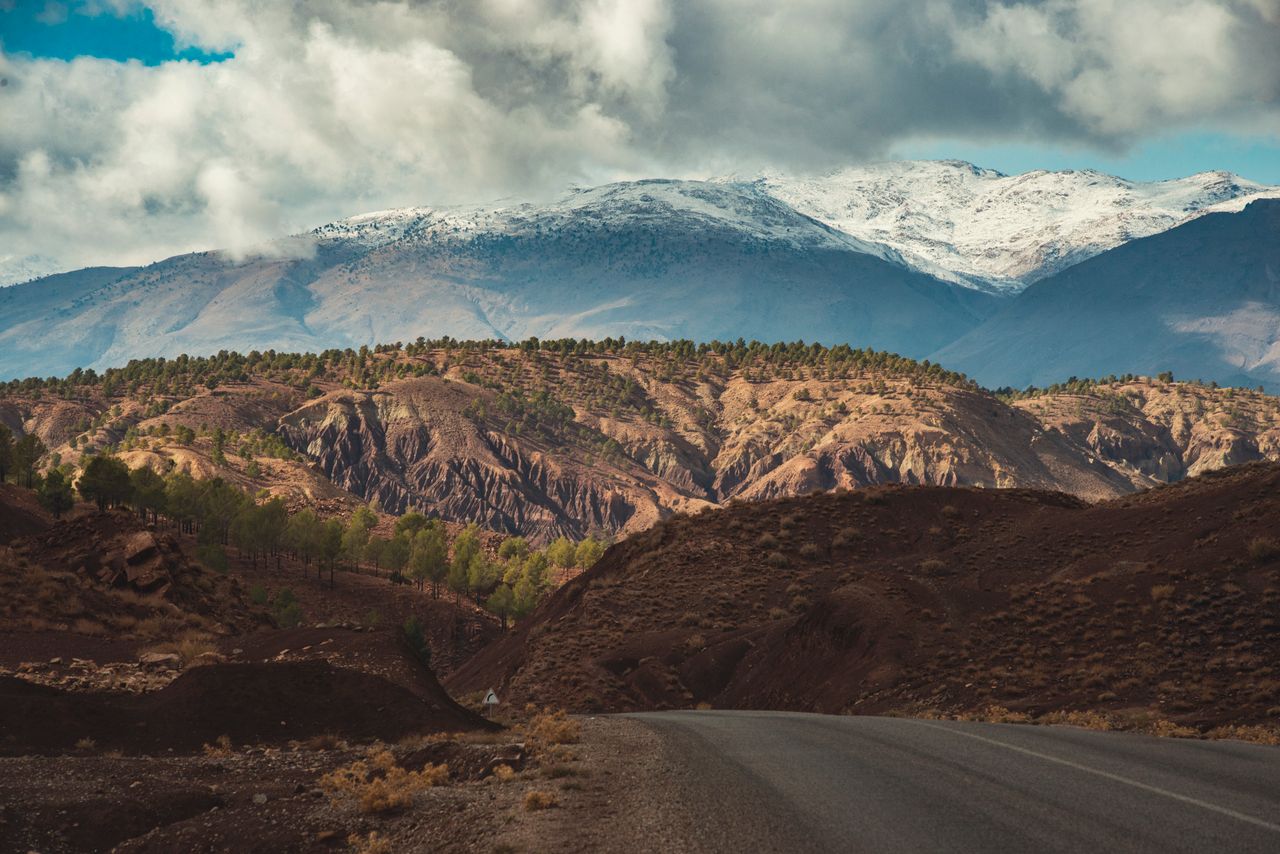
I have walked into a lot of mountain ranges that promise more than they deliver. The Atlas is not one of them. Within a two-hour drive of Marrakech, the land folds upward into a wall of rock, snow, and Berber villages that feels closer to the Himalayas than to anything you’d expect a few kilometers from a rooftop pool. If you’re planning to hike here, this guide covers what actually matters: the routes worth your time, when to go, and what a realistic itinerary looks like.
Why the Atlas Mountains Belong on Every Hiker’s List
The High Atlas is North Africa’s highest and most extensive mountain range, and it holds Jebel Toubkal, the tallest peak on the continent north of Kilimanjaro’s neighbors, at 4,167 meters. What makes it worth the trip isn’t just the altitude.
- Accessible high mountains: Trailhead villages sit around two hours from Marrakech, so a serious trek doesn’t require a serious expedition to reach
- No technical climbing required: Even the Toubkal summit is a walk-up route, not a climbing route, though it demands fitness and altitude tolerance
- Living Berber culture: Villages along the trails are inhabited, working communities, not tourist reconstructions
- Range of experiences: From half-day valley walks near Ourika to multi-day circuits through the Ait Bougmez valley
The Main Hiking Regions
Toubkal National Park and Imlil
This is the classic. Imlil, a Berber village at roughly 1,740 meters, is the gateway for anyone hiking toward Mount Toubkal. Most routes here are well marked and supported by mules, muleteers, and mountain refuges, which makes this the right starting point for a first Atlas trek.
Ourika Valley
The closest hiking region to Marrakech, Ourika suits travelers with limited time. Expect waterfalls, terraced fields, and shorter trails that don’t require overnight gear.
Ait Bougmez and the M’Goun Circuit
Quieter and less visited than Toubkal, this central High Atlas valley is where experienced trekkers go for solitude. The M’Goun Circuit is a multi-day route through some of the most preserved valleys in the country.
Tichka Plateau
A high, open traverse known for its stark, almost lunar landscape. It ends near the Kasbah of Telouet, a former feudal palace. This is the route for hikers who want remoteness over crowds.
Sample Trek Comparison
| Trek | Duration | Difficulty | Best For |
|---|---|---|---|
| Ourika Valley day hike | Half day to 1 day | Easy | Short trips, families, first-timers |
| Mount Toubkal ascent | 2 to 3 days | Moderate to challenging | Summit-focused hikers with good fitness |
| Toubkal Circuit | 6 days | Moderate | Trekkers wanting more than a summit push |
| M’Goun Circuit (Ait Bougmez) | 6 to 8 days | Moderate to challenging | Experienced hikers seeking solitude |
| Tichka Plateau traverse | 3 to 4 days | Moderate | Hikers prioritizing remote landscapes |
What a Toubkal Trek Actually Involves
The standard route runs from Imlil to a mountain refuge below the summit on day one, a five to six hour walk along the Mizane Valley, passing the village of Aroumd and the shrine of Sidi Chamharouch. Day two starts before sunrise for the summit push, followed by a descent back to Imlil the same day.
No mountaineering experience is required, but altitude and long walking hours make it moderate to challenging rather than a casual walk. A guide is strongly recommended, and on most organized treks, mandatory.
[EXTERNAL LINK: reputable resource on altitude sickness prevention]
Best Time of Year to Hike the Atlas Mountains
- Spring (April to June): Green valleys, wildflowers, and generally stable weather
- Autumn (September to November): Considered by many experienced trekkers the best overall window, with clear skies and mild temperatures
- Summer (July and August): Hot in the lower valleys but still workable for high-altitude routes like Toubkal, where elevation keeps temperatures down
- Winter (December to March): Toubkal becomes a snow and ice route requiring crampons and ice axe experience; not recommended for hikers without mountaineering background
What to Pack
- Sturdy, broken-in hiking boots, not trail runners, for scree and rocky sections
- Layered clothing: temperatures swing sharply between valley floors and mountain passes
- A warm layer and hat even in shoulder seasons, since refuges and high camps get cold at night
- Sun protection: altitude and reflection off rock intensify UV exposure
- A basic first aid kit and any personal altitude sickness medication, discussed with a doctor beforehand
Choosing a Guide or Trekking Operator
Independent hiking is possible on some lower routes, but for Toubkal and the more remote valleys, a licensed local guide is the standard and the safer choice. Look for:
- Officially licensed mountain guides, not just drivers offering to walk with you
- A clear plan for mules or porters if the trek is multi-day
- Transparent pricing that states what’s included: refuge nights, meals, guide fees, and park entry
- Flexibility to adjust pace for your fitness level, particularly for older or less experienced hikers
FAQ
Do I need hiking experience to climb Mount Toubkal?
No technical climbing skills are required for the standard route, but a good level of fitness and some hiking experience make the trek considerably more enjoyable, since altitude and long walking days are the main challenges.
How many days do I need to hike Mount Toubkal?
Most guided treks run 2 to 3 days, with one night at a mountain refuge before the summit push. Trekkers wanting a fuller experience of the region often extend this into the 6-day Toubkal Circuit.
When is the best time to hike the Atlas Mountains?
Spring (April to June) and autumn (September to November) offer the most reliable conditions. Winter requires snow and ice experience, while summer is hot in lower valleys but still viable at altitude.
Is a guide required for Atlas Mountains treks?
For Mount Toubkal and the more remote valleys, a licensed local guide is strongly recommended and often required by trekking operators for safety reasons.
What’s the difference between the Toubkal trek and the M’Goun Circuit?
The Toubkal trek is a shorter, summit-focused route close to Marrakech and sees the most visitors. The M’Goun Circuit, in the Ait Bougmez valley, is a longer, quieter multi-day trek through less-visited terrain, better suited to experienced hikers seeking solitude.
Plan Your Atlas Mountains Trek
Whether you’re after a half-day walk through Ourika or a full expedition across the Tichka Plateau, the Atlas Mountains reward hikers at every level. Get in touch to build an itinerary that matches your fitness, timeline, and appetite for altitude.