
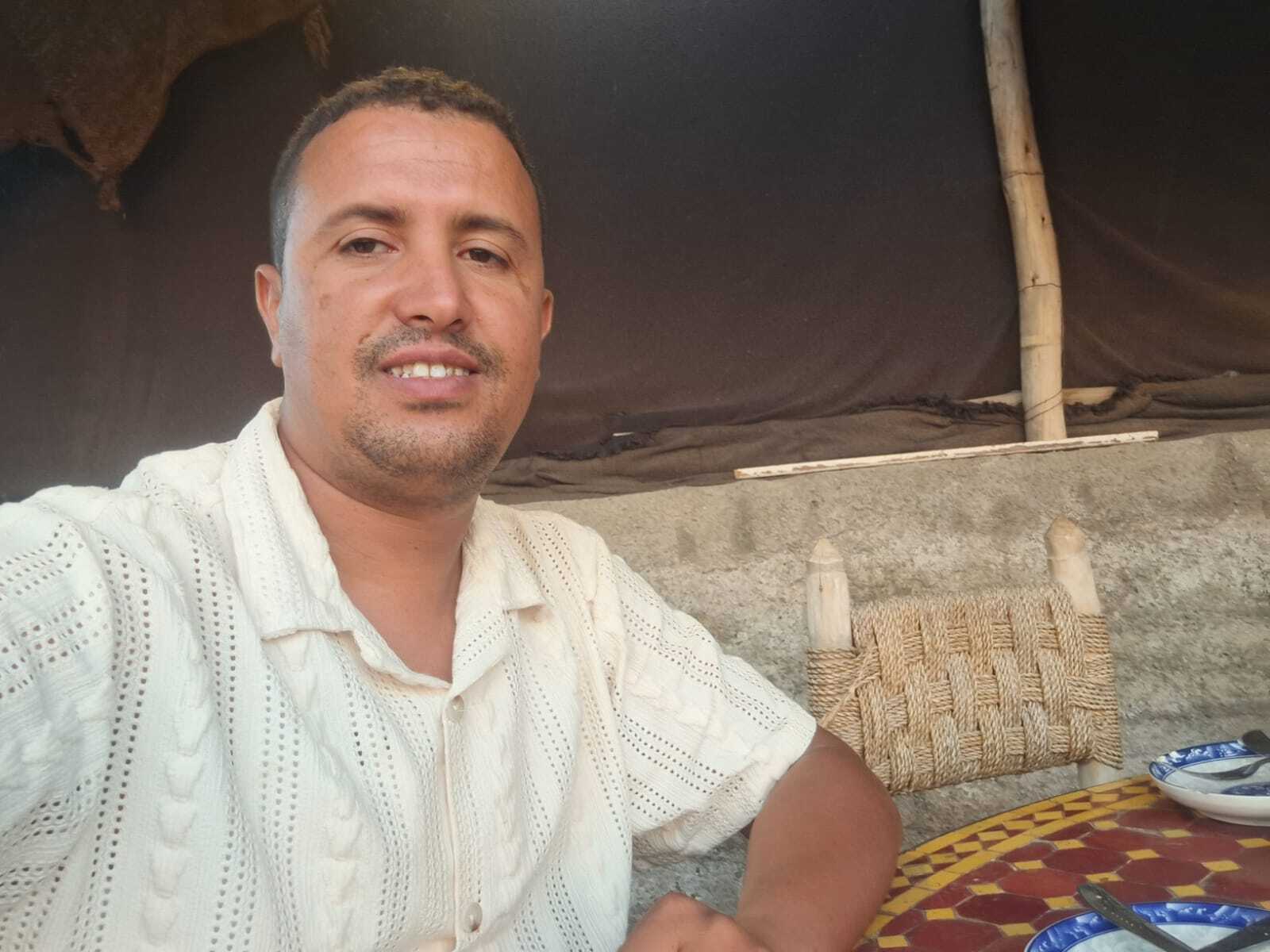
Most lists of Morocco’s top sites are written by people who visited once, or by people who never came at all. I have been driving these roads for years, and the thing I notice is that travellers rarely regret the places they chose. They regret the order they chose them in. They land in Marrakech, book a day trip to somewhere four hours away, and lose a day of their holiday to a windscreen.
So this list is not ranked by ticket sales or by how photogenic a place looks at golden hour. It is arranged the way Morocco actually works on the ground, in two blocks: the cities and monuments that draw everybody, and the mountains and desert where the country opens up and stops feeling like a checklist. For each place I have written what it is, whether it earns the detour, and one thing I would tell you in the car on the way there.
Morocco received a record 19.8 million visitors in 2025, which means the famous sites are busier than they have ever been. That is not a reason to skip them. It is a reason to time them properly, which is most of what this article is about.
The Cities and Monuments Everyone Comes For
These are the places that fill the guidebooks, and they deserve to. The mistake is treating them as interchangeable. Marrakech and Fes are not two versions of the same city, and visiting them back to back without understanding the difference is how people end up saying the medinas blurred together.
Jemaa el Fna and the Marrakech Medina
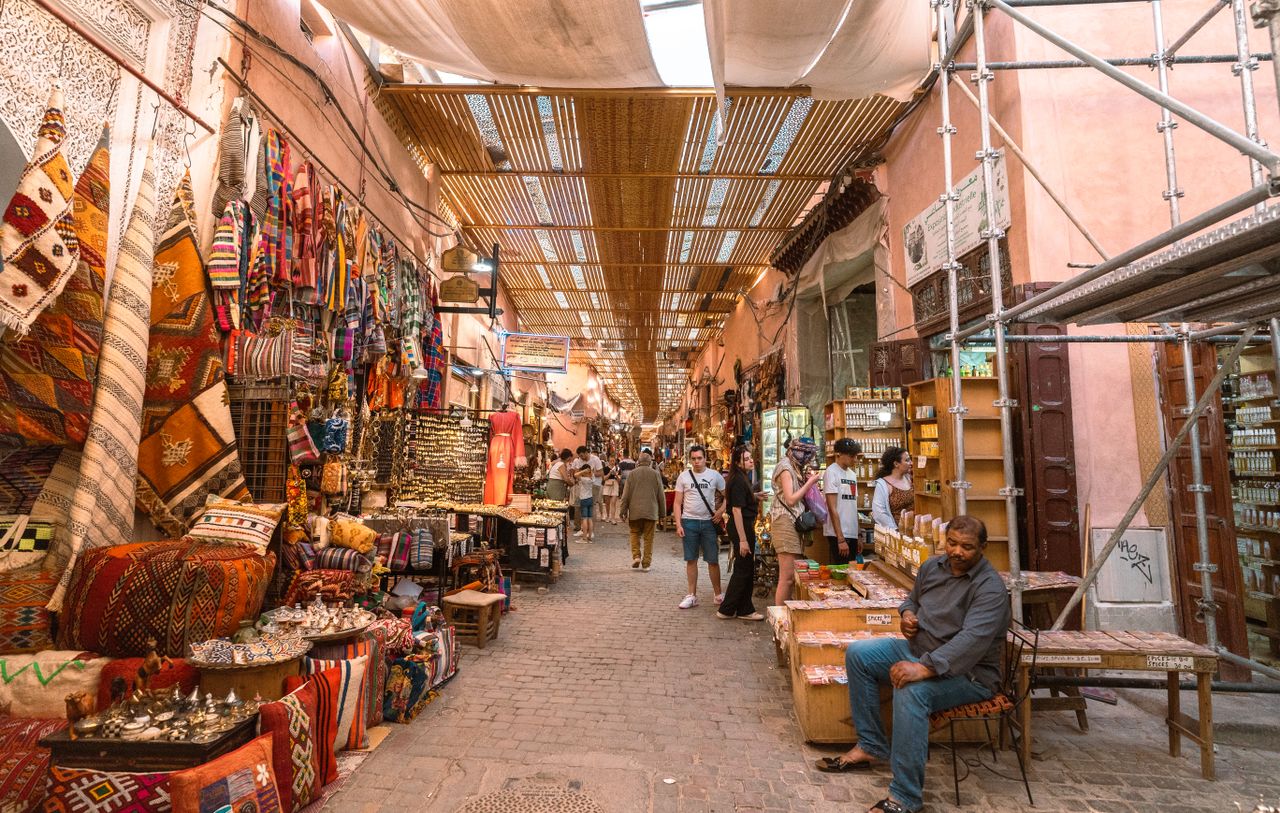
Jemaa el Fna is a large open square that does almost nothing during the day and then transforms completely after sunset, when the food stalls go up, the musicians arrive, and the whole thing becomes the loudest place in Morocco. It is a UNESCO-listed site not for its architecture, which is minimal, but for the oral traditions performed there.
Here is what I tell people. Go twice. Walk through at around four in the afternoon to get your bearings while it is calm, then come back at nine. Arriving for the first time at peak hour is overwhelming in a way that makes some travellers retreat to their riad and never return. Also be clear that the snake charmers and the monkeys will ask for money the moment you raise a camera, so decide in advance whether you want that interaction.
The medina around the square is where you will spend more time than you expect. Getting lost is genuinely part of it, and the souks are laid out by trade, so leather sits with leather and metalwork with metalwork. Allow a full day for the square and souks together. [INTERNAL LINK: /marrakech-tours/ “Marrakech guided tours”]
Jardin Majorelle and the Yves Saint Laurent Museum
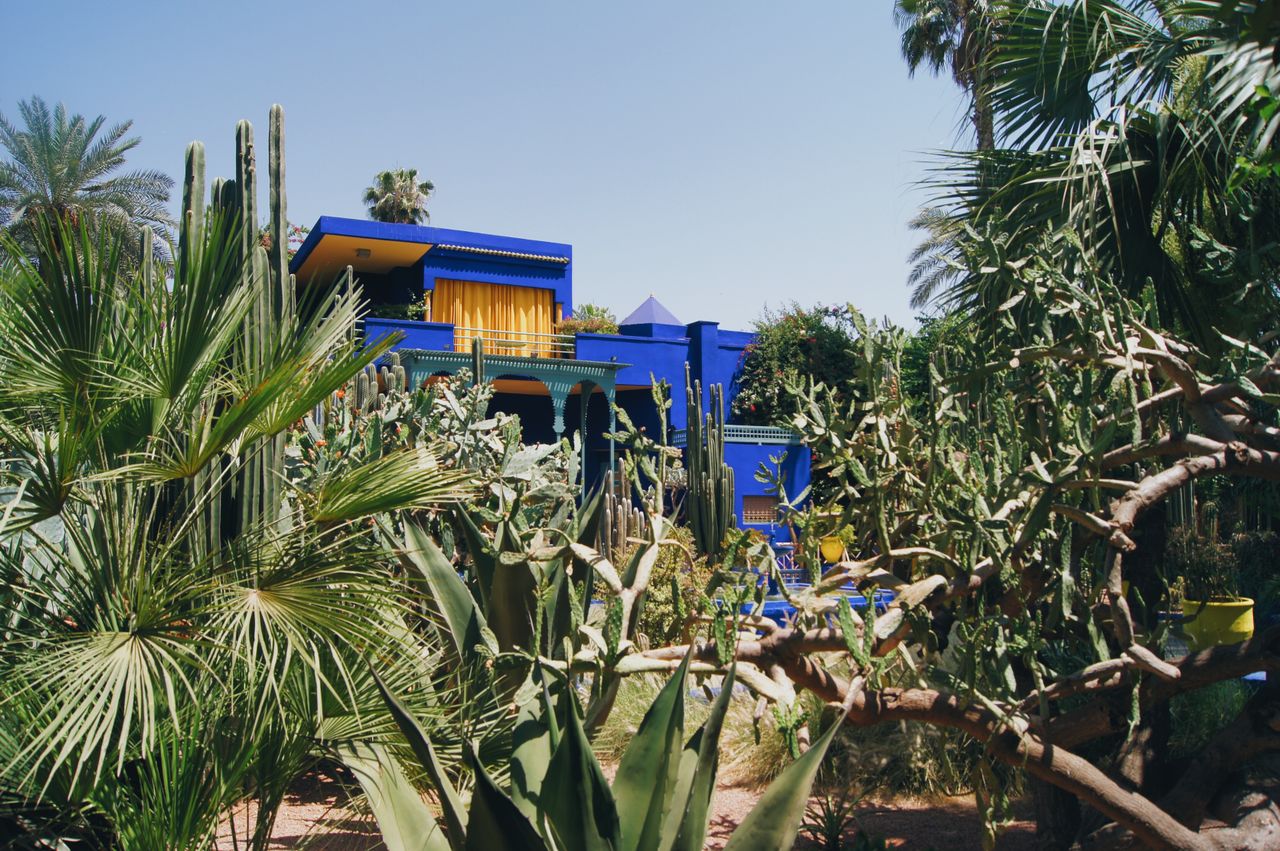
A botanical garden built by the French painter Jacques Majorelle and later restored by Yves Saint Laurent, painted in a cobalt blue so specific it carries his name. The YSL museum sits next door and the two are usually visited together.
It is beautiful and it is small. That combination is the whole problem. The garden takes forty minutes to walk properly and it takes on hundreds of thousands of visitors a year, so the experience depends almost entirely on when you arrive. Book online in advance and take the first slot of the morning. Travellers who show up at midday without a ticket in high season often do not get in at all, and those who do get in spend the visit queuing behind other people’s photographs.
If you only have appetite for one garden in Marrakech, and the crowds put you off, Le Jardin Secret inside the medina is quieter and gives you a rooftop view over the old city.
Bahia Palace and the Saadian Tombs
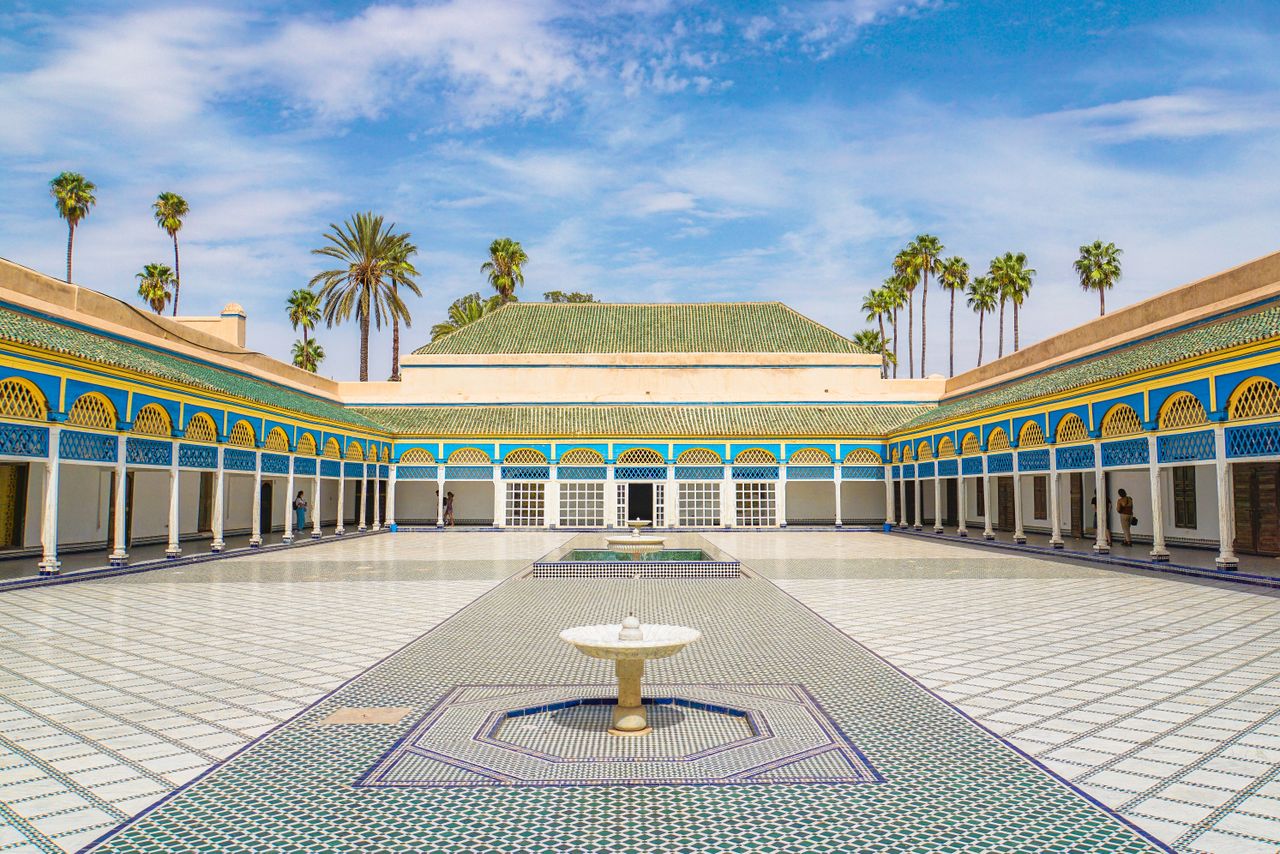
Bahia Palace is a nineteenth century residence built for a grand vizier, and it is the best place in Marrakech to understand how wealth was actually lived here: courtyards inside courtyards, painted cedar ceilings, rooms arranged around light rather than around views. The Saadian Tombs are a sixteenth century royal necropolis that was sealed up and effectively forgotten until 1917, which is why the tilework survived in the state it did.
Practical note that matters more than it sounds. The tombs are reached through a narrow passage and the central chamber is small, so the queue moves slowly and the whole visit can be twenty minutes of waiting for five minutes of looking. Go early or accept it. Bahia handles crowds far better because it is large and open, so if you are short on time and can only do one, I would send you to Bahia.
Pair either with the Badii Palace ruins nearby if you want the contrast between a palace maintained and a palace stripped for parts.
Fes el Bali and the Chouara Tanneries
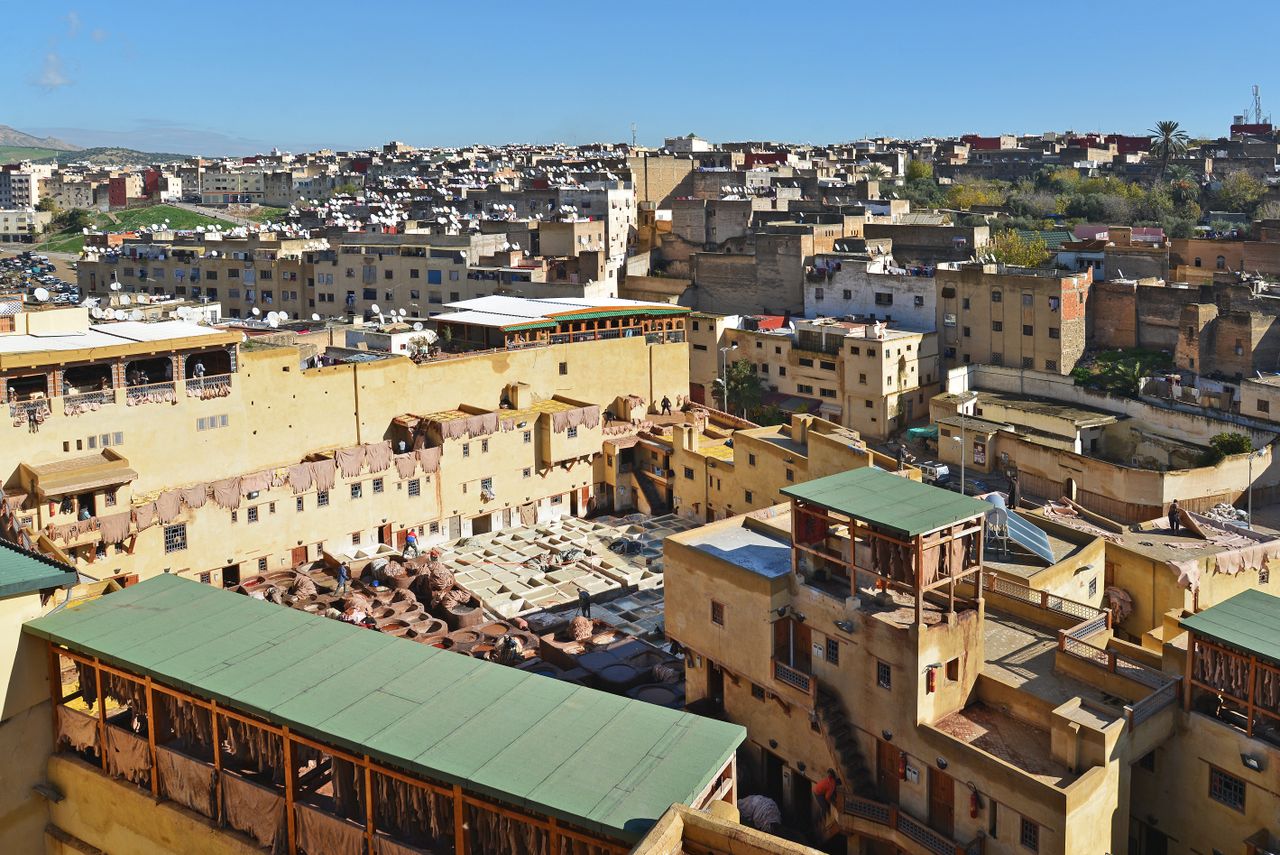
Fes el Bali is the oldest and largest car-free urban area in the world, and it is the single most impressive thing in Morocco that is not a landscape. It is also the place where a guide stops being a convenience and becomes close to necessary, because the alley network is genuinely disorienting and the interesting doorways are unmarked.
The Chouara tanneries are the image everyone knows, the stone vats of dye seen from a leather shop terrace. Two honest points. First, the smell is real and strong, and the sprig of mint they hand you at the door helps less than you hope. Second, you are viewing it from a shop and there will be a sales conversation afterward. That is the arrangement. It is still worth doing, because you are watching a process that has not fundamentally changed in centuries, but go in knowing the shape of it.
Do not miss the Bou Inania and Attarine madrasas while you are in the old city. They are small, they are quiet, and the carved plaster and zellij work in them is finer than anything in the palaces of Marrakech. [INTERNAL LINK: /fes-tours/ “Fes tours and excursions”]
Chefchaouen, the Blue City
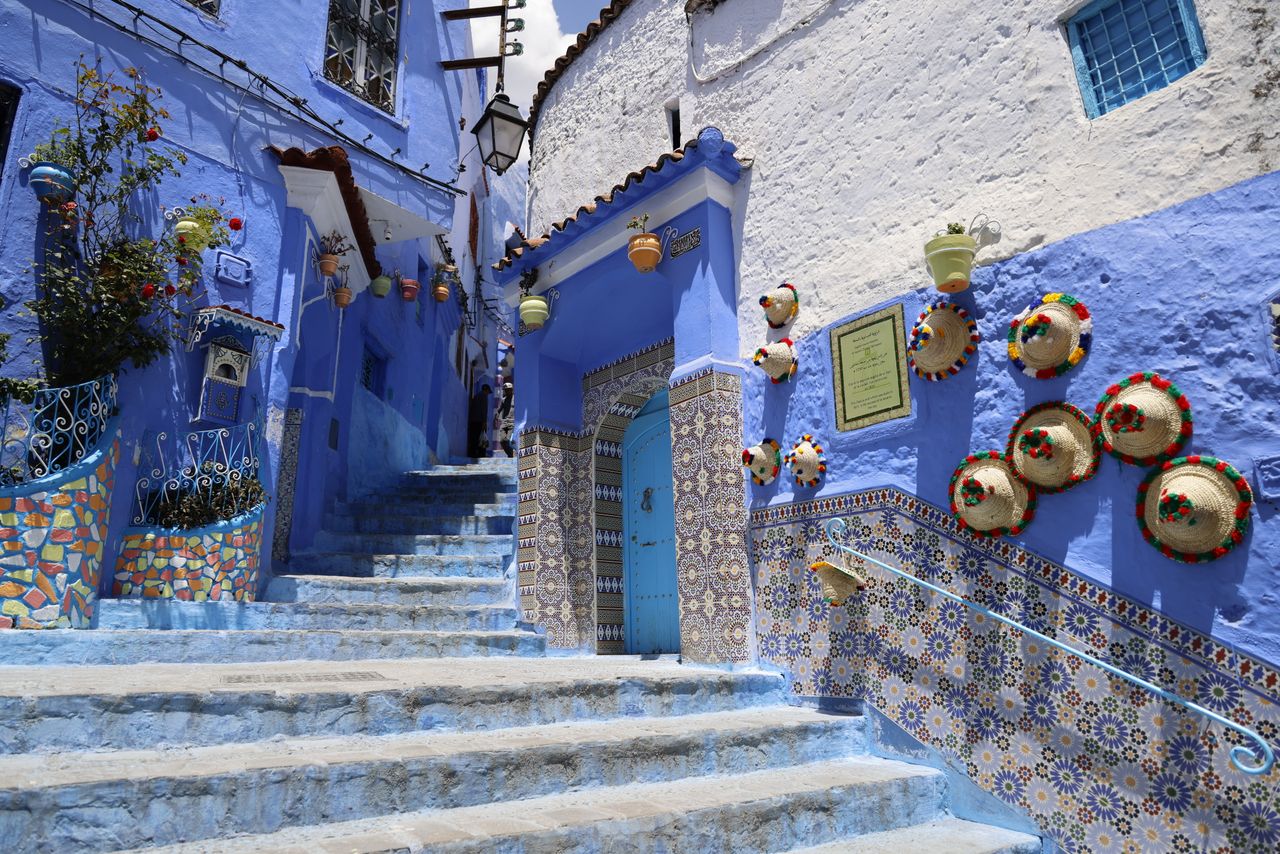
A mountain town in the Rif where the buildings are painted in every shade of blue, and one of the few places in Morocco where the reality matches the photographs completely. The town is small, walkable, and noticeably calmer than the imperial cities.
The thing people get wrong is the timing of the day. Coach groups arrive mid-morning and leave mid-afternoon, so the streets are at their emptiest before nine and after five. Sleeping one night there instead of doing it as a day trip changes the visit entirely, and the walk up to the Spanish Mosque for sunset over the blue roofs is worth structuring your evening around.
Chefchaouen is far north. From Fes it is around four hours, from Marrakech it is a long day of driving and should never be attempted as a day trip. If it matters to you, build it into a route rather than bolting it on.
The Hassan II Mosque, Casablanca
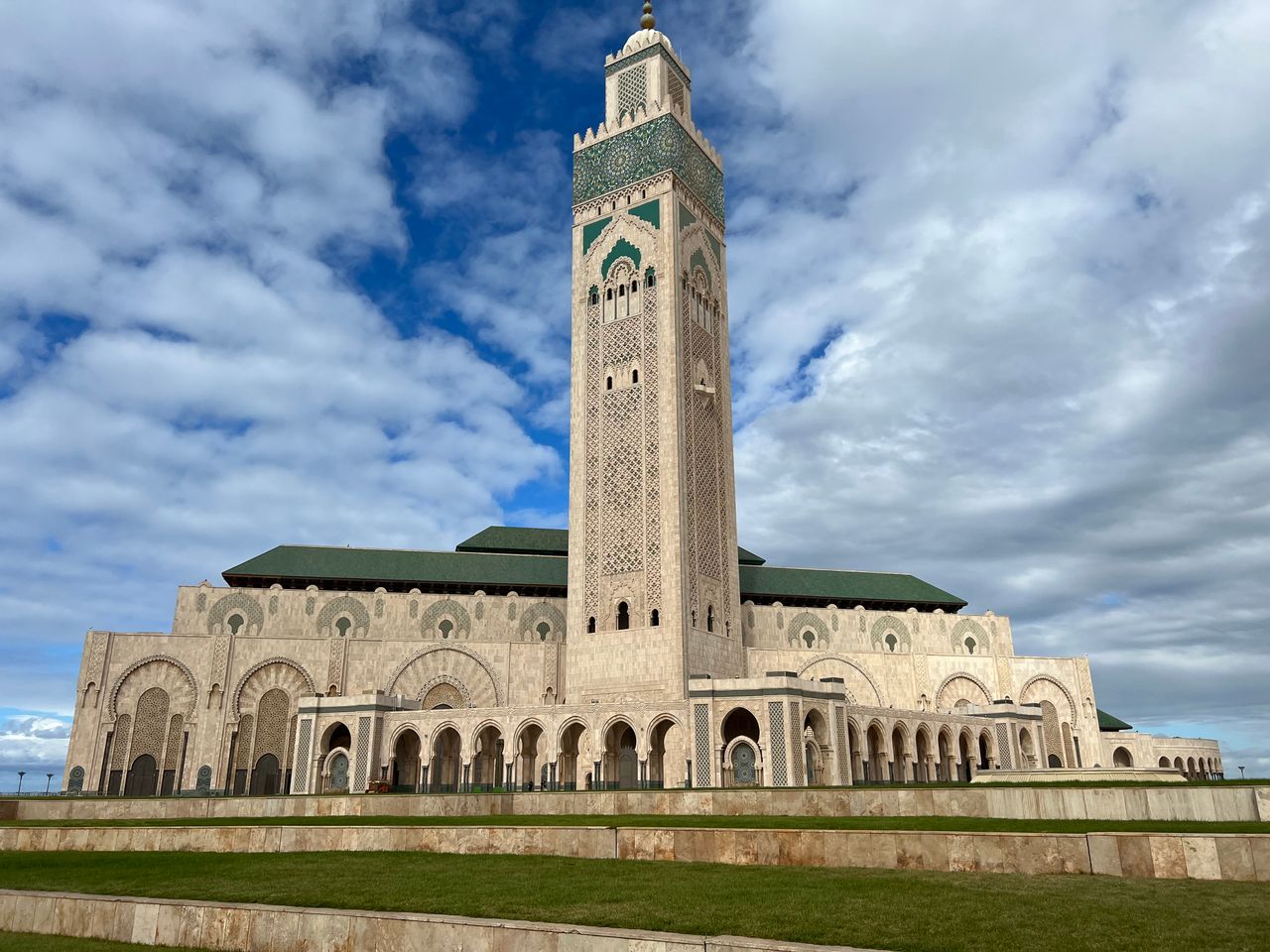
The largest mosque in Morocco, built partly over the Atlantic, with a minaret of 210 metres. It is one of very few functioning mosques in the country that non-Muslim visitors may enter, and that alone makes it significant for most travellers.
Entry is by guided tour on a fixed schedule, in several languages, so check the day’s times before you build your afternoon around it. Fridays and prayer times restrict access. The interior is the reason to go: a retractable roof, a floor of polished granite and marble, and craftsmanship commissioned from artisans across the country.
Casablanca as a whole is a working commercial city rather than a tourist one, and travellers who plan two days there usually wish they had spent one. The mosque, the Habous quarter and the Art Deco centre fill a day comfortably.
The Kasbah of the Oudayas and Hassan Tower, Rabat
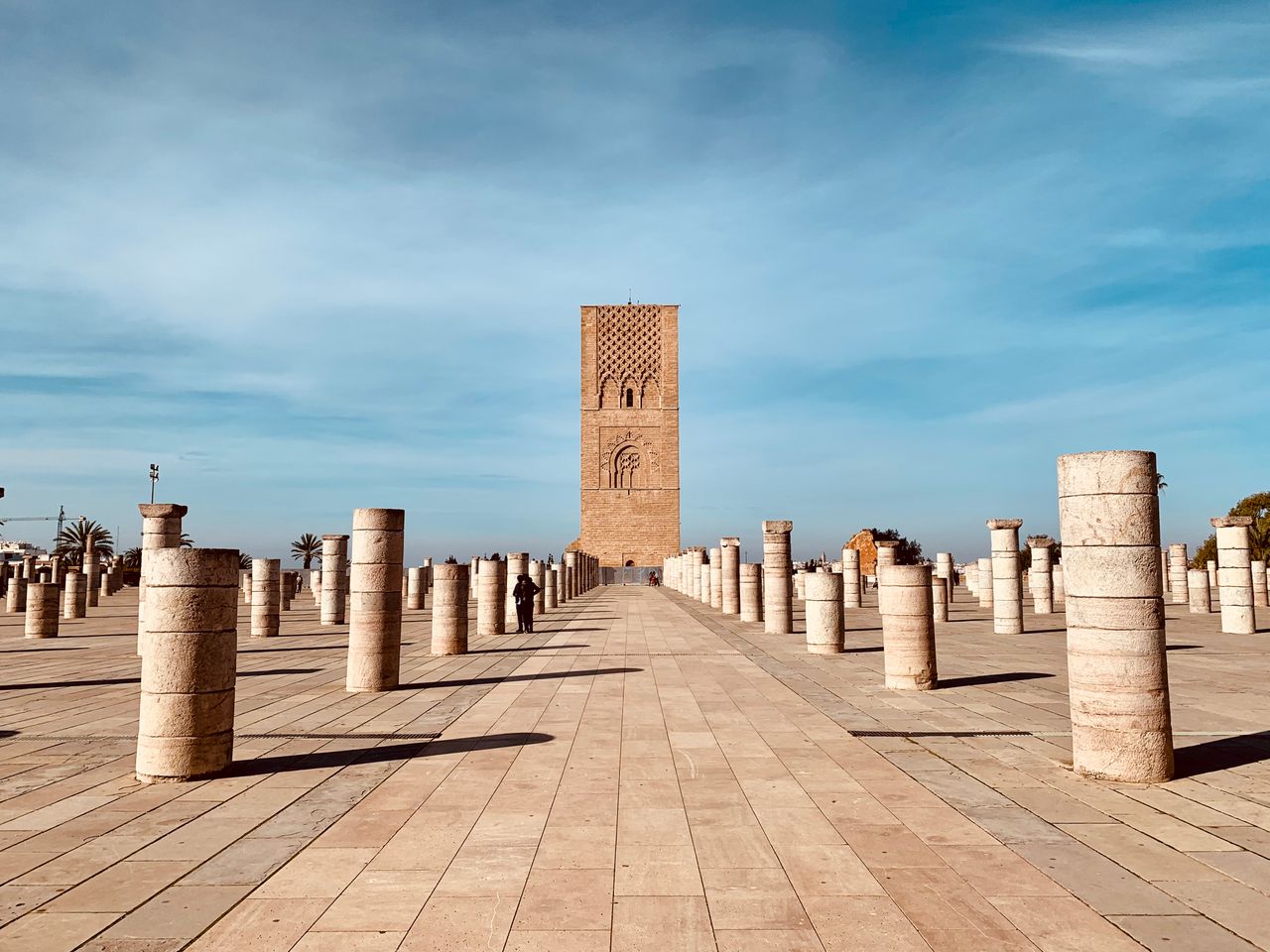
Rabat is the capital and the most relaxed of the imperial cities, which is exactly why it gets skipped. The Kasbah of the Oudayas is a fortified quarter above the river mouth, painted blue and white, with an Andalusian garden inside the walls and a view over the estuary toward Salé. Hassan Tower is the unfinished minaret of a twelfth century mosque, abandoned when the sultan died and then flattened by the 1755 earthquake, leaving a field of broken columns beside the mausoleum of Mohammed V.
Rabat rewards a slower pace. If your route runs along the coast or you are flying in and out of Casablanca, half a day here is easy to justify. If you are on a tight loop through the south, it is the first thing I would cut without guilt.
Volubilis and Meknes
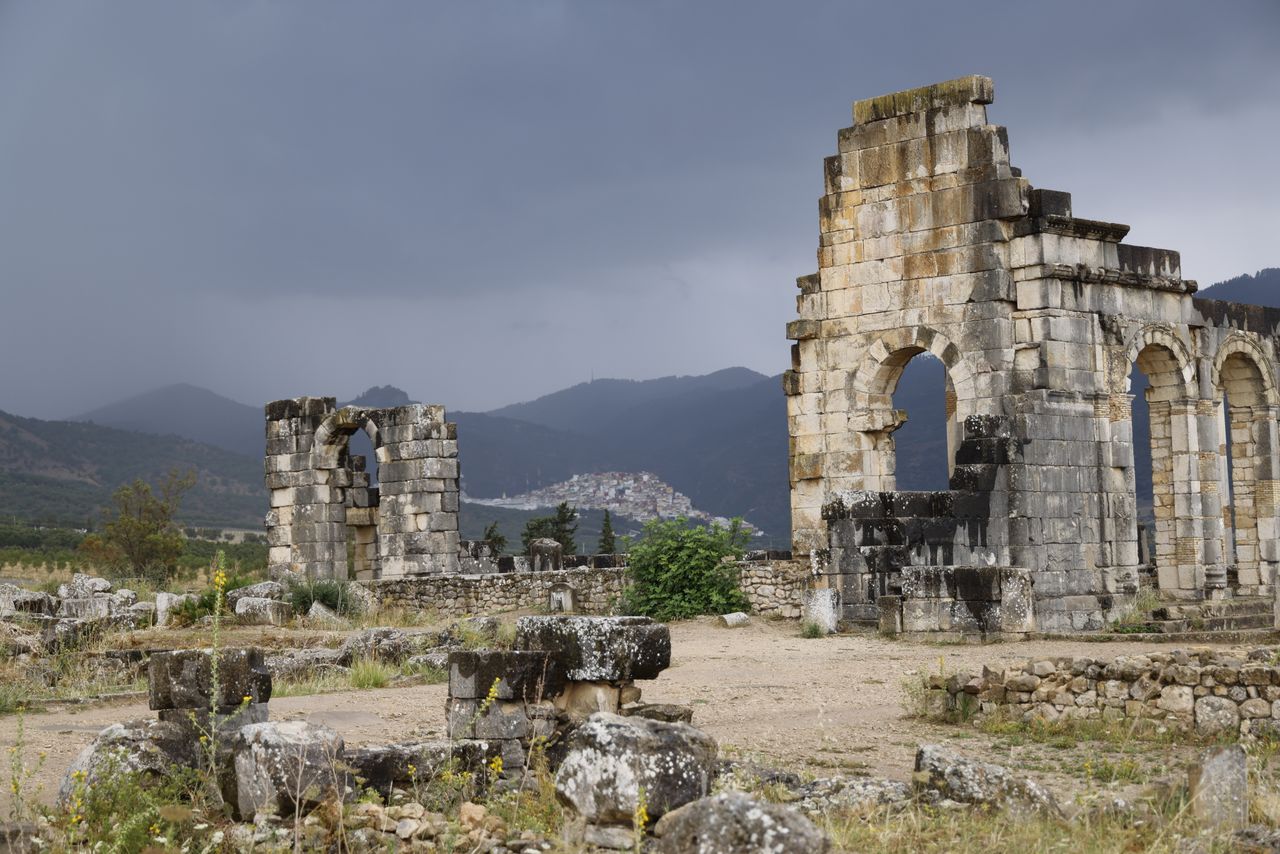
Volubilis is a Roman city, the best preserved in Morocco, sitting on a hillside of olive groves with mosaic floors still in place under the open sky. Meknes is twenty minutes away, a walled imperial city with the enormous Bab Mansour gate and the granaries of Heri es-Souani, which were built to feed twelve thousand horses.
These two are almost always done together as a day from Fes, and that is the right way to do it. Volubilis has very little shade and the mosaics sit in full sun, so between June and September you want to be there early or late, not at noon. In spring the surrounding hills are green and it is one of the most pleasant half days in the country.
The Essaouira Medina and Skala
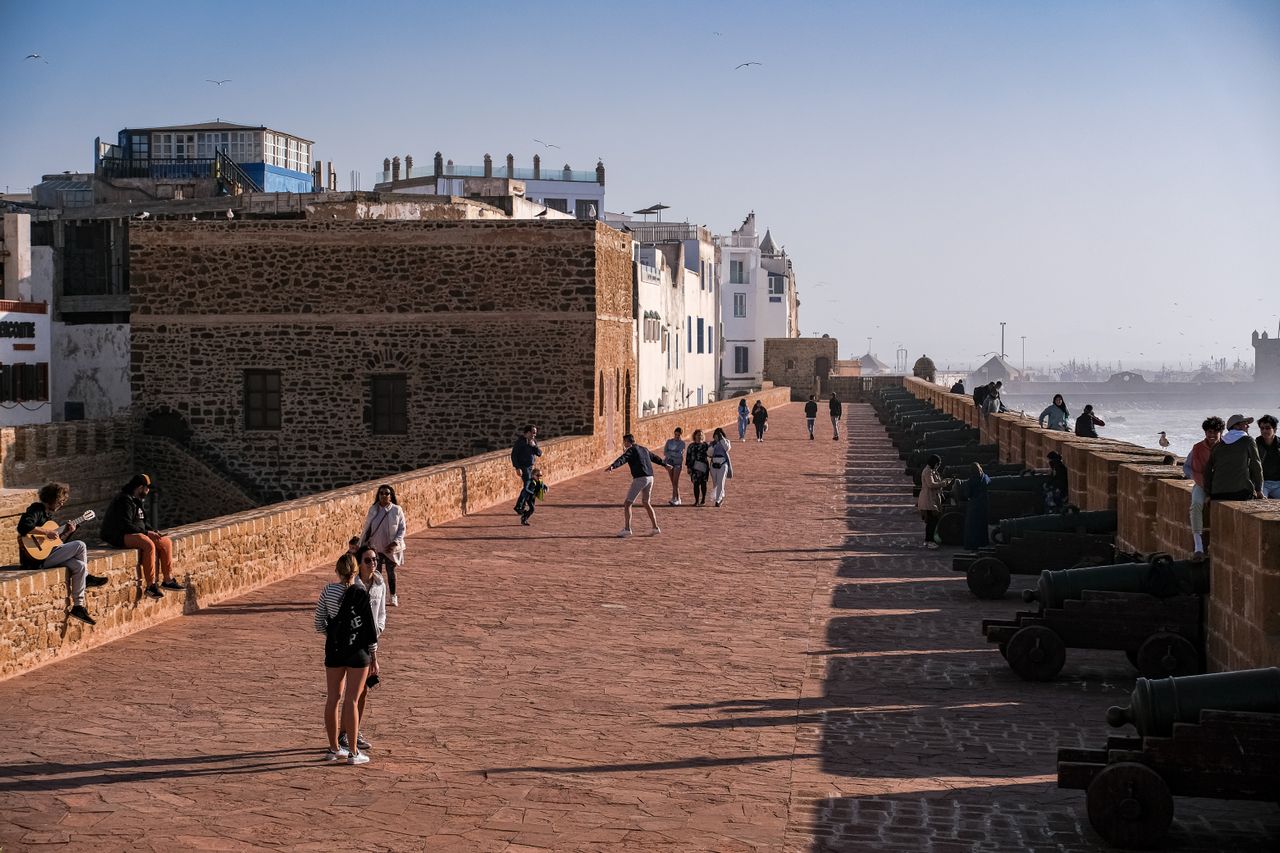
A walled port on the Atlantic, whitewashed and blue-shuttered, with ramparts you can walk and a working fishing harbour that still smells like a working fishing harbour. Essaouira is the antidote to Marrakech: the same country at a quarter of the intensity.
The wind is the defining fact. It blows almost constantly, which made the town a kitesurfing centre and also means the beach is often not a lying-down beach. Bring a layer even in summer, because people arrive from 38 degrees in Marrakech and are cold by evening.
It is around two and a half hours from Marrakech, so it works as a long day trip but works far better as two nights. [INTERNAL LINK: /essaouira-tours/ “Essaouira day trip from Marrakech”]
The Sahara and the Atlas, Where Morocco Opens Up
This is the part of the country I know best and the part that changes how people talk about their trip afterward. The cities give you history. The south gives you space, and the drive between the two is not dead time. Some of the best hours of a Morocco trip are spent looking out of a window at the Tizi n’Tichka pass.
One structural thing to understand before booking anything. Ouarzazate saw a 27 percent rise in overnight stays in 2025 and Errachidia, the province that contains Merzouga, rose 22 percent. Those are the fastest growing areas in the country. The desert is no longer the off-the-map option it was ten years ago, which makes the choice of operator and camp matter more than it used to.
Ait Ben Haddou
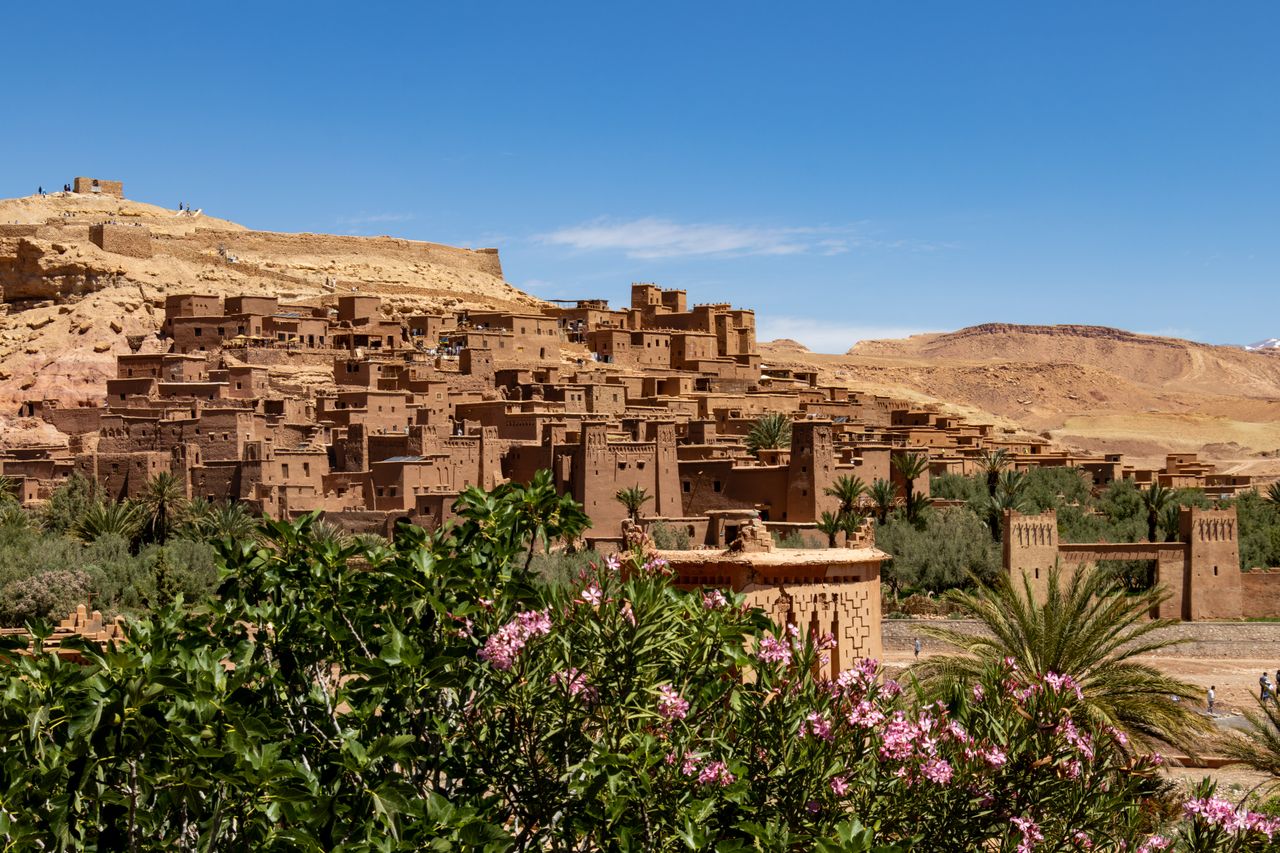
A fortified earthen village on a hillside above the Ounila river, UNESCO listed, and the most filmed location in Morocco by a wide margin. Climbing to the granary at the top takes twenty minutes and gives you the valley in both directions.
What I would tell you in the car: the light is the whole thing. Late afternoon turns the mud brick orange and the crowds thin out at the same time, so if you have any control over your schedule, arrive after four rather than at eleven. Also, the modern village sits across the river from the old ksar and most of the restaurants are on the modern side, which is worth knowing when you plan lunch.
It sits about four hours from Marrakech over the Tizi n’Tichka pass, and roughly thirty minutes from Ouarzazate. Almost nobody comes here as a standalone trip and I would not recommend it as one. It belongs in a route toward the desert or in a longer day that includes Ouarzazate and the film studios.
Erg Chebbi and Merzouga
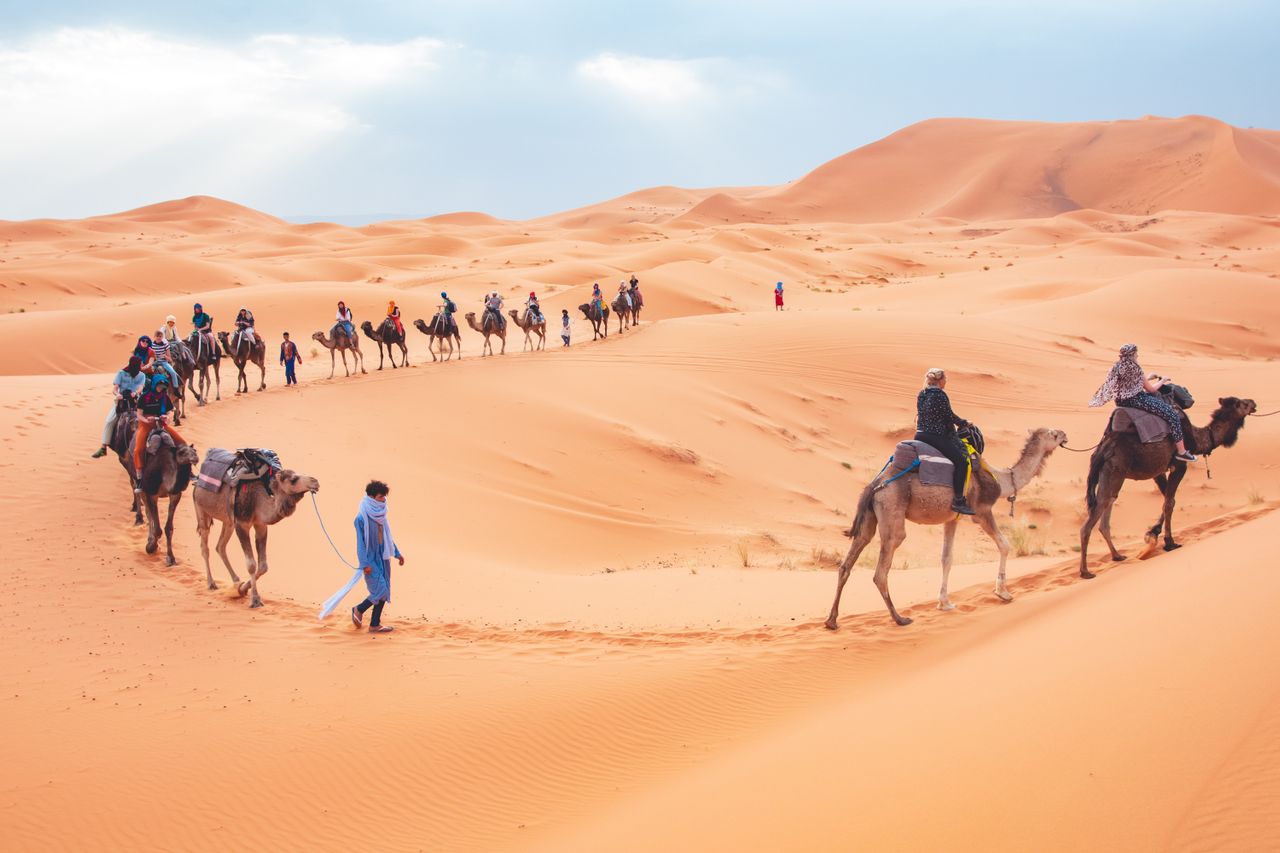
Erg Chebbi is the dune field most people picture when they picture the Sahara: 150 metres high in places, orange, and reached by driving to the village of Merzouga and then leaving the tarmac. It is the classic Morocco desert experience and it deserves the reputation.
The honest version of the logistics. Merzouga is roughly nine to ten hours of driving from Marrakech. This is why the three day, two night trip exists and why the two day version is hard on people. If someone offers you Merzouga as a day trip from Marrakech, that is not a real trip. From Fes the drive is shorter, around seven hours, which is why running Fes to the desert to Marrakech in one direction is usually the smarter route.
What makes or breaks the night is the camp. There is a wide gap between a basic bivouac and a camp with private bathrooms and proper beds, and the price difference is smaller than people assume. Ask specifically about bathroom arrangements, heating in winter and how far the camp sits from the road, because a camp fifteen minutes into the dunes is a completely different night from one you can see the car park from.
Winter nights in the Sahara get genuinely cold, close to freezing in January. Bring a warm layer regardless of what the daytime forecast says.
Erg Chegaga and M’Hamid
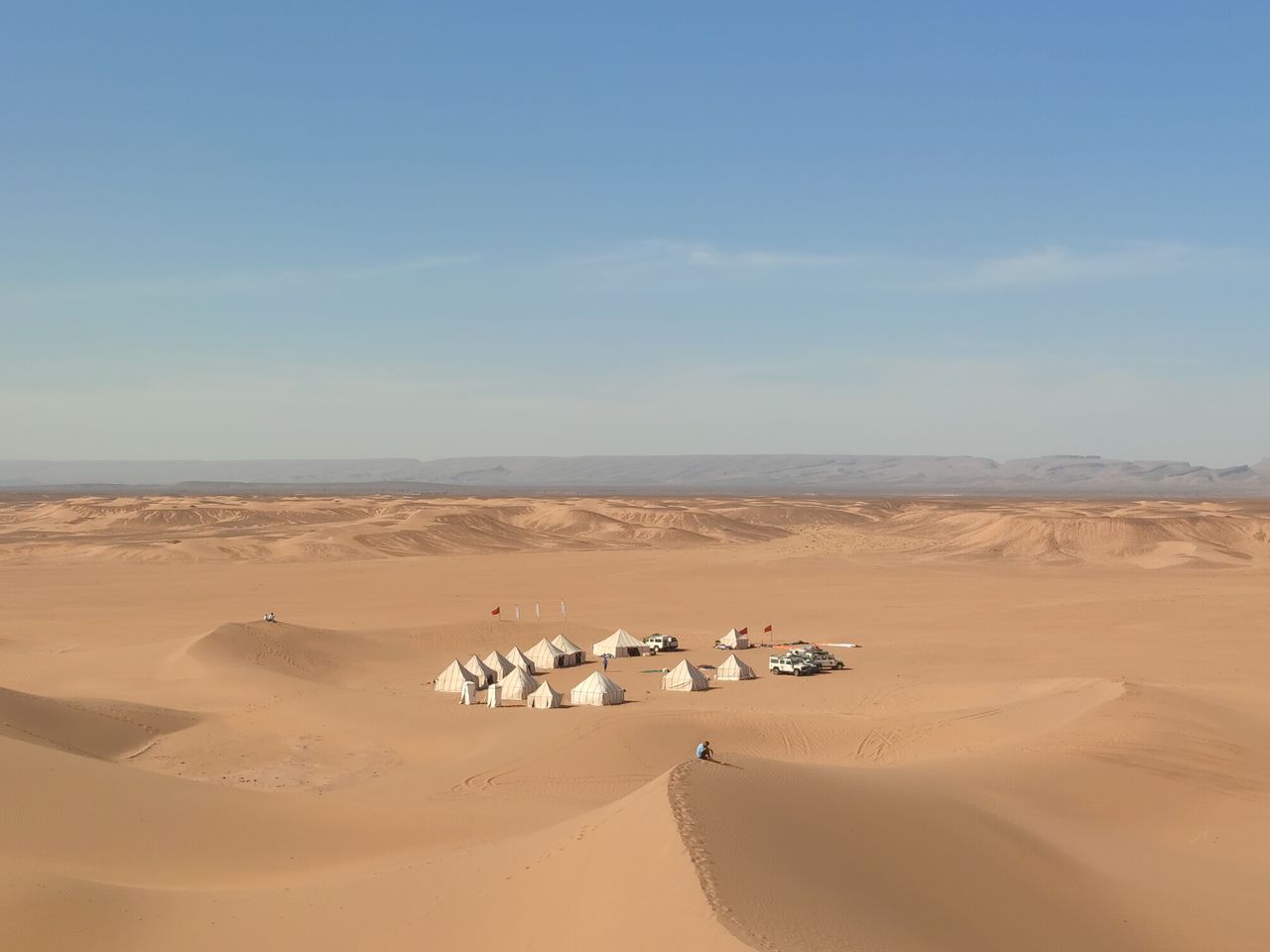
The other great dune sea, larger and wilder than Erg Chebbi, reached through M’Hamid at the end of the Draa valley. There is no paved road to it. You cross around two hours of stony desert by 4×4 to get there, which is precisely why it stays quiet.
Chegaga is for travellers who have either done Merzouga already or who care more about emptiness than convenience. Fewer camps, fewer vehicles, no village nearby. The trade-off is a harder journey and less flexibility if plans change. If you have four days and a preference for solitude over comfort, this is the one I would push you toward.
Todra and Dades Gorges
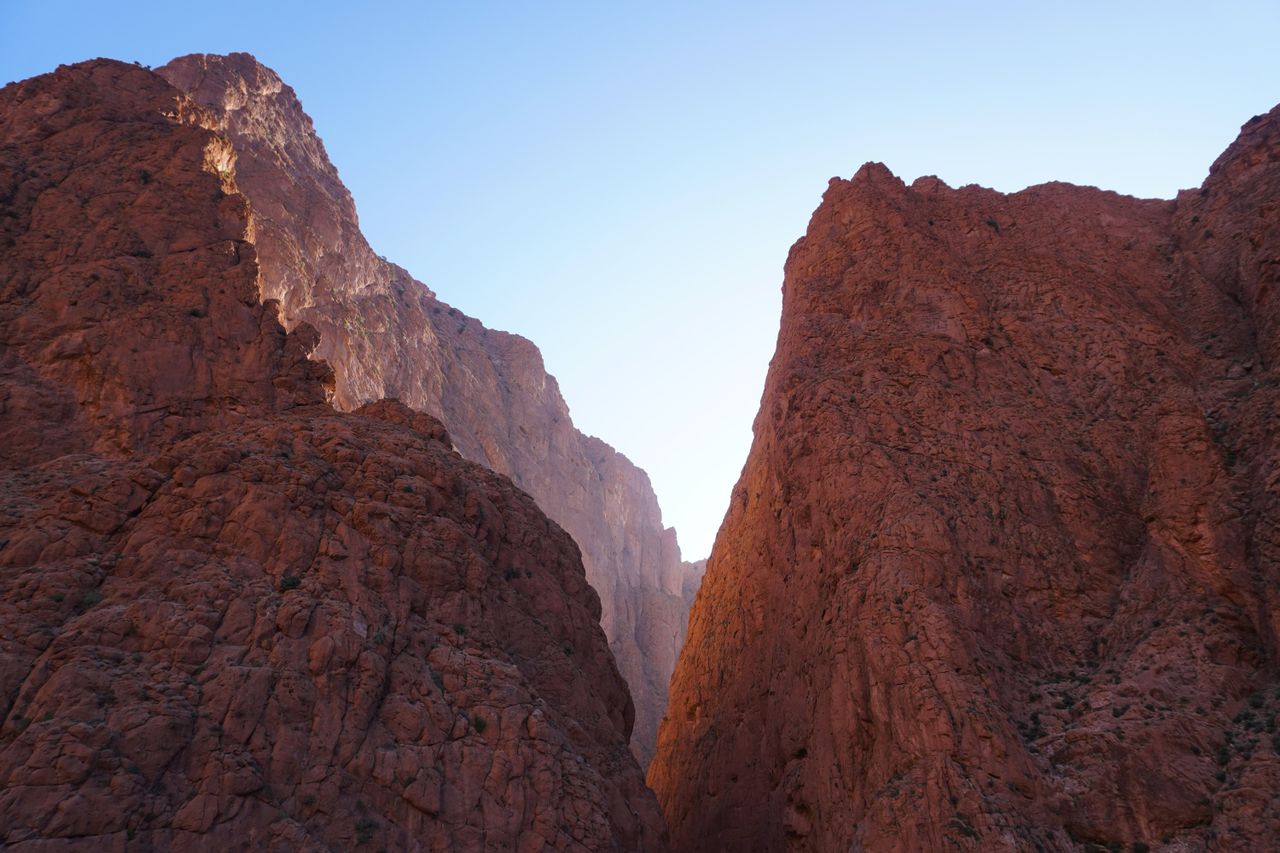
Two canyons in the eastern High Atlas that almost every desert route passes through. Todra is the dramatic one, a corridor where limestone walls rise around 300 metres with a river and a road running along the floor, narrowing to about ten metres at the tightest point. Dades is broader, greener, and famous for the switchback road climbing out of it.
You can walk the floor of Todra in an hour and it costs nothing. It is one of the few genuinely spectacular things in Morocco that requires no ticket and no fitness. Both gorges also make good overnight stops that break the long drive between Marrakech and the desert, which is often a better plan than pushing through in one go.
Between them lies the Valley of Roses around Kelaat M’Gouna, which is worth timing your trip around if you are travelling in May for the rose harvest.
Toubkal and the Imlil Valley
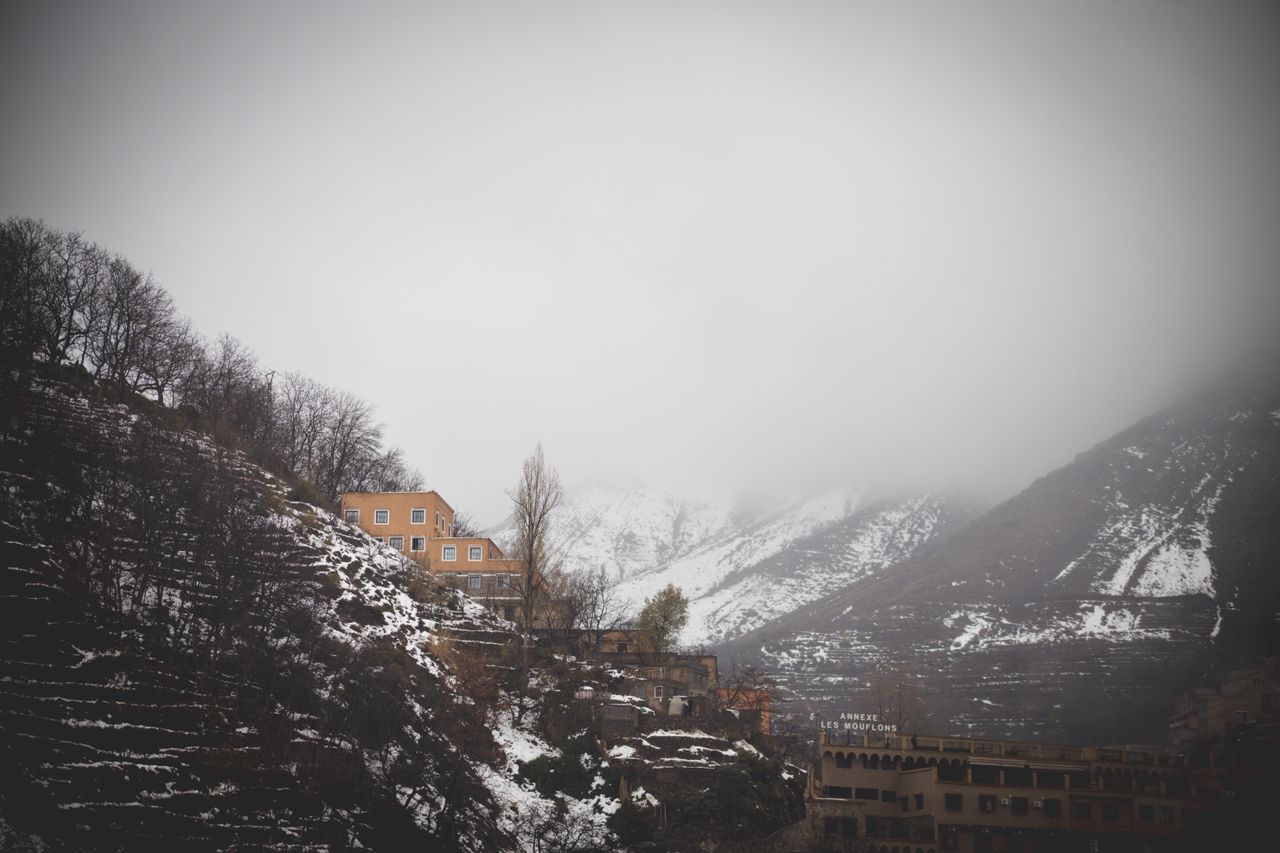
Toubkal is the highest peak in North Africa at 4,167 metres, and Imlil is the walnut-growing village at the trailhead, ninety minutes from Marrakech. The two are usually spoken about together but they are very different commitments.
Imlil itself is a comfortable day trip. You can walk to Armed or up toward the Sidi Chamharouch shrine, have lunch on a terrace, and be back in the city by evening. That is accessible to most people with reasonable mobility.
The summit is not a day trip and it is not a walk. It is two days minimum, with a night in a refuge at 3,200 metres, a pre-dawn start, and real altitude. No technical climbing is required in summer, but in winter it needs crampons, an ice axe and experience. Guides are mandatory in the national park. Every season there are people who booked it as an add-on to a city break and turned back, so be honest with yourself about your fitness before committing.
The Ourika Valley and Agafay
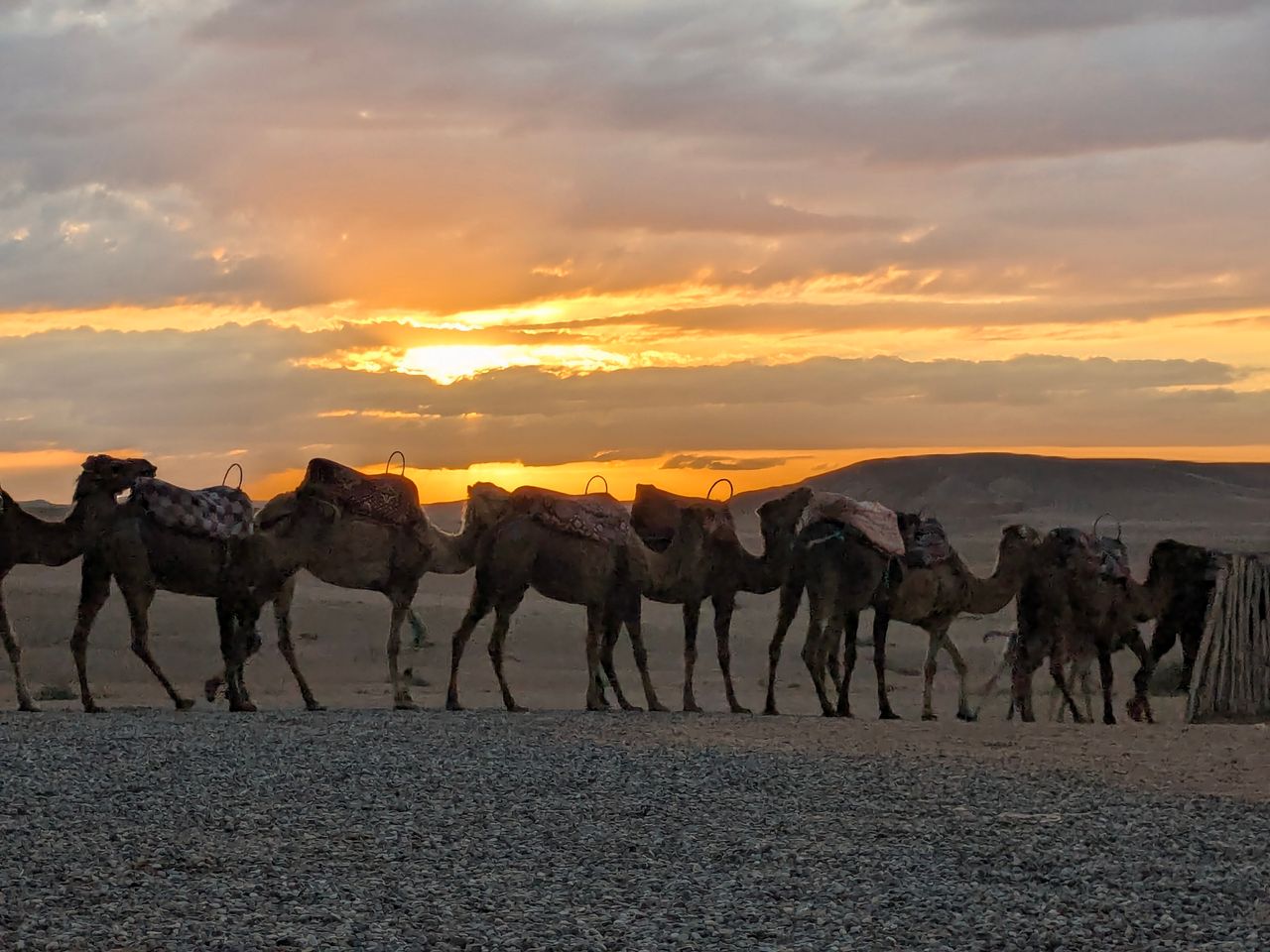
The two easiest escapes from Marrakech, and the two that get confused most often.
Ourika is a green river valley in the Atlas, about an hour out, with Berber villages, a series of waterfalls at Setti Fatma, and cafés with tables set in the riverbed. It is where families from Marrakech go on Sundays, which tells you something. Go on a weekday if you can. The walk to the falls is rocky and involves scrambling, so wear proper shoes rather than sandals.
Agafay is not a desert in the sand sense. It is a stone plateau of bare hills forty minutes from the city, and it has become the default evening excursion: camel or quad ride, dinner under lights, sometimes a pool. It photographs like the Sahara and it is not the Sahara. I say that plainly because travellers occasionally book Agafay believing they have seen the desert. As an evening out with Atlas views on the horizon it is excellent, and it is the right answer for people without the days to reach Merzouga. Just know what you are buying.
Ouzoud Waterfalls
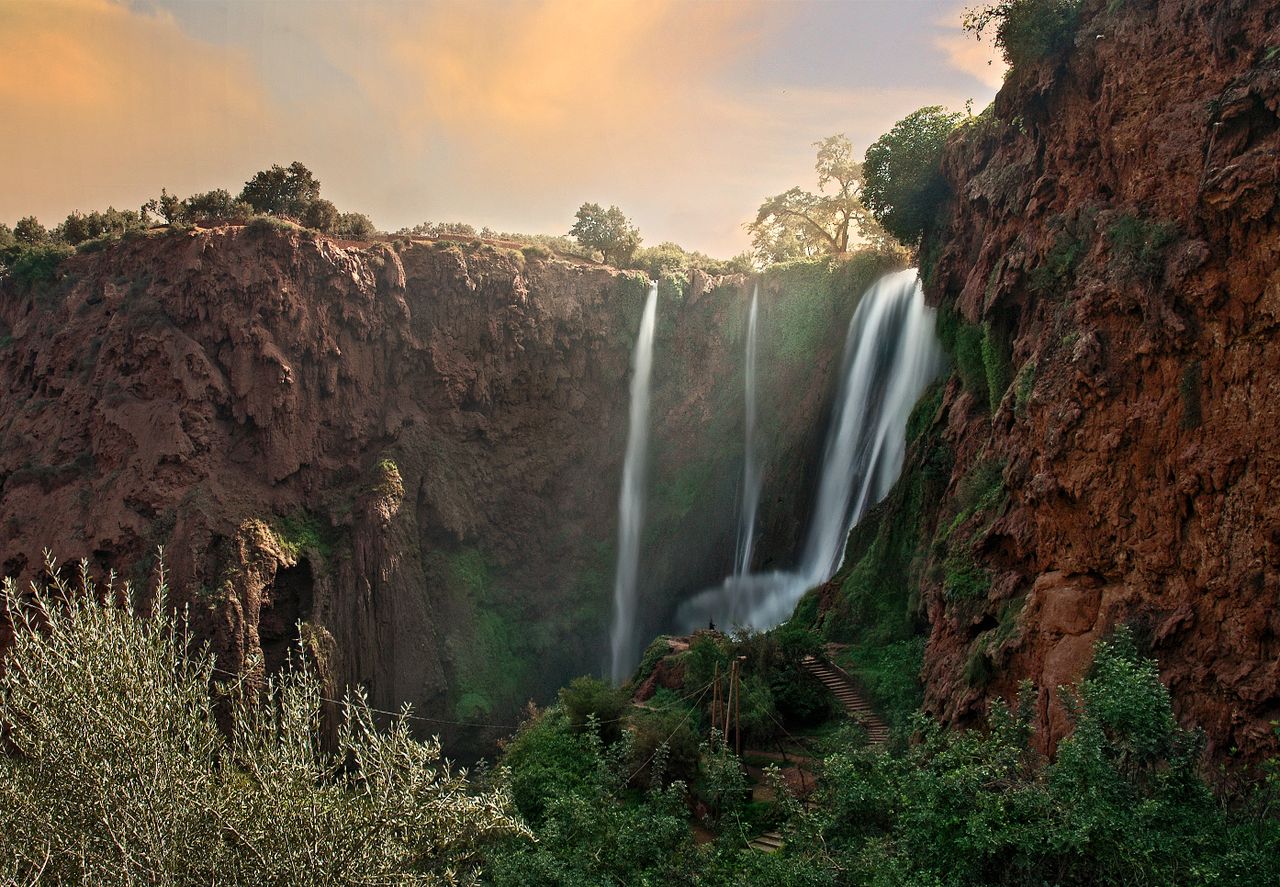
The highest waterfall in Morocco at around 110 metres, dropping in stages into a pool where boats take visitors close to the spray. Wild macaques live in the trees around the path down.
It is about two and a half hours from Marrakech, and the descent to the base takes twenty to thirty minutes on uneven steps with the climb back up in the heat of the afternoon. Reasonable fitness helps. Water volume is highest in spring after the snowmelt and lowest at the end of summer, which is the single biggest factor in whether people come back impressed.
Do not feed the monkeys, whatever the vendors at the top are selling.
Practical Answers Before You Book
How many days do you need to see the main sites in Morocco?
Seven days covers one city plus the desert properly, for example Marrakech with a three day Sahara loop and two days of day trips. Ten days lets you run Fes to the desert to Marrakech without rushing, which is the route I recommend most often. Under five days, choose one base and accept that the desert will not fit. Trying to see Marrakech, Fes, Chefchaouen and Merzouga in a week means spending roughly thirty hours in a vehicle.
What is the best time of year to visit?
Spring, from March to May, is the strongest overall: green landscapes, comfortable temperatures everywhere, and the Sahara still pleasant. Autumn, September to November, is nearly as good. July and August are hard in Marrakech and the desert interior, though the Atlantic coast at Essaouira stays cool. Winter is excellent for the desert by day but cold at night, and the high Atlas passes can close briefly after snow.
Which places can realistically be combined?
Marrakech pairs naturally with Ait Ben Haddou, the gorges and Merzouga, since they sit on one line south and east. Fes pairs with Volubilis, Meknes and Chefchaouen in the north. The classic mistake is treating Chefchaouen as reachable from Marrakech in a day, which it is not. If you want both the north and the desert, travel in one direction between Fes and Marrakech rather than returning to your start point.
Is it better to hire a driver or self-drive?
Roads between cities are good and self-driving is entirely possible. What you lose is the local reading of the place, and what you gain is flexibility. Most travellers on a first visit with limited days find a private driver-guide simpler, because the distances are long and the interesting stops between towns are not signposted. For the desert specifically, the final approach requires a 4×4 regardless.
Is Morocco safe for tourists?
Morocco is generally a safe destination and tourism has grown to record levels, which brings its own infrastructure and attention. Standard precautions apply as anywhere: awareness in crowded medinas, agreeing prices before services, caution with unofficial guides.
Planning Your Route
If there is one thing to take from this list, it is that Morocco is a country of distances. The sites are not the difficulty. The sequence is. A well-built ten day route feels spacious and a badly built one feels like a rally, and they can contain exactly the same places.
I plan every trip myself and I am the guide who meets you here. No call centre, no handover, no different name at the airport. If you tell me how many days you have and what you actually want to see, I will tell you honestly what fits and what does not.
Message me on WhatsApp at +212 613 405 439 or use the contact form, and we can put a route together.