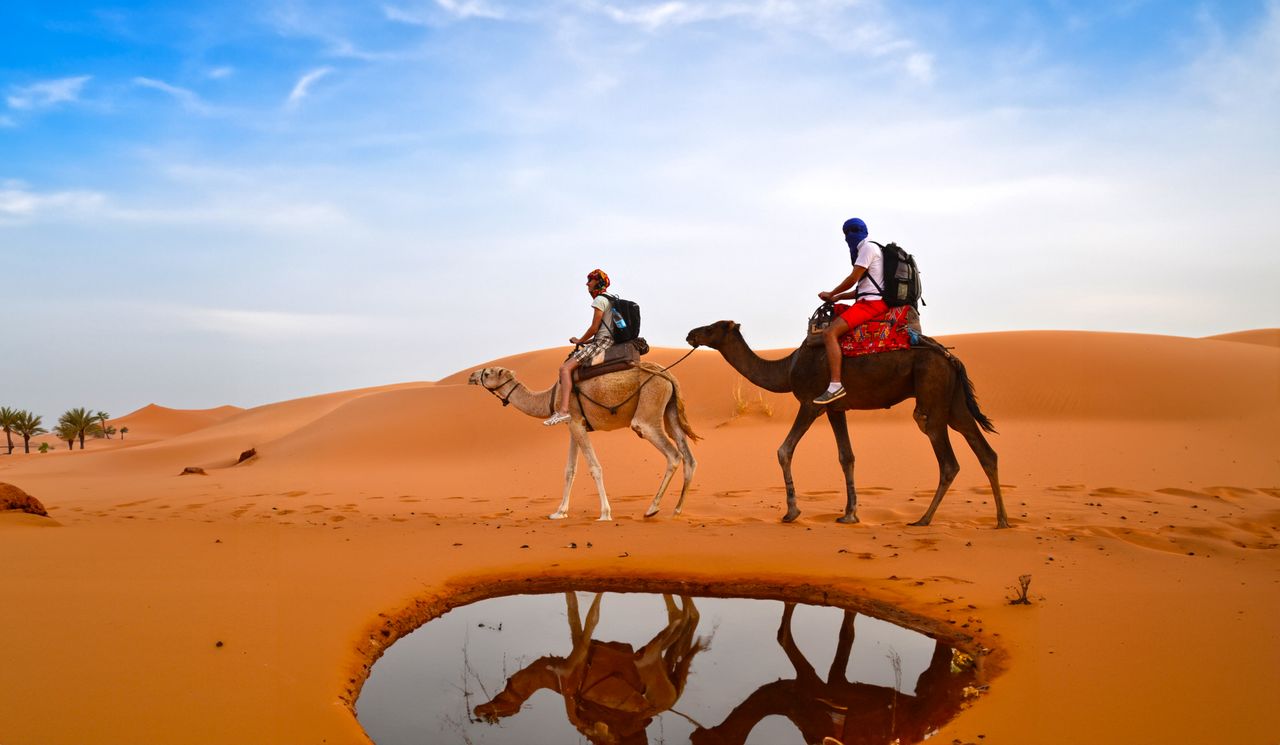
Most people who visit the Sahara arrive by 4×4, ride a camel over one dune at sunset, sleep in a camp and leave the next morning. It is a beautiful evening, and I have organised hundreds of them. But walking in the desert is a completely different experience, and if you have the time and the legs for it, it is the one I would choose. On foot you feel the shape of the land: the way the sand hardens underfoot at dawn and softens by noon, the silence between dunes that is so complete you hear your own pulse, the way a green thread of tamarisk in the distance means water. Nothing in a vehicle comes close.
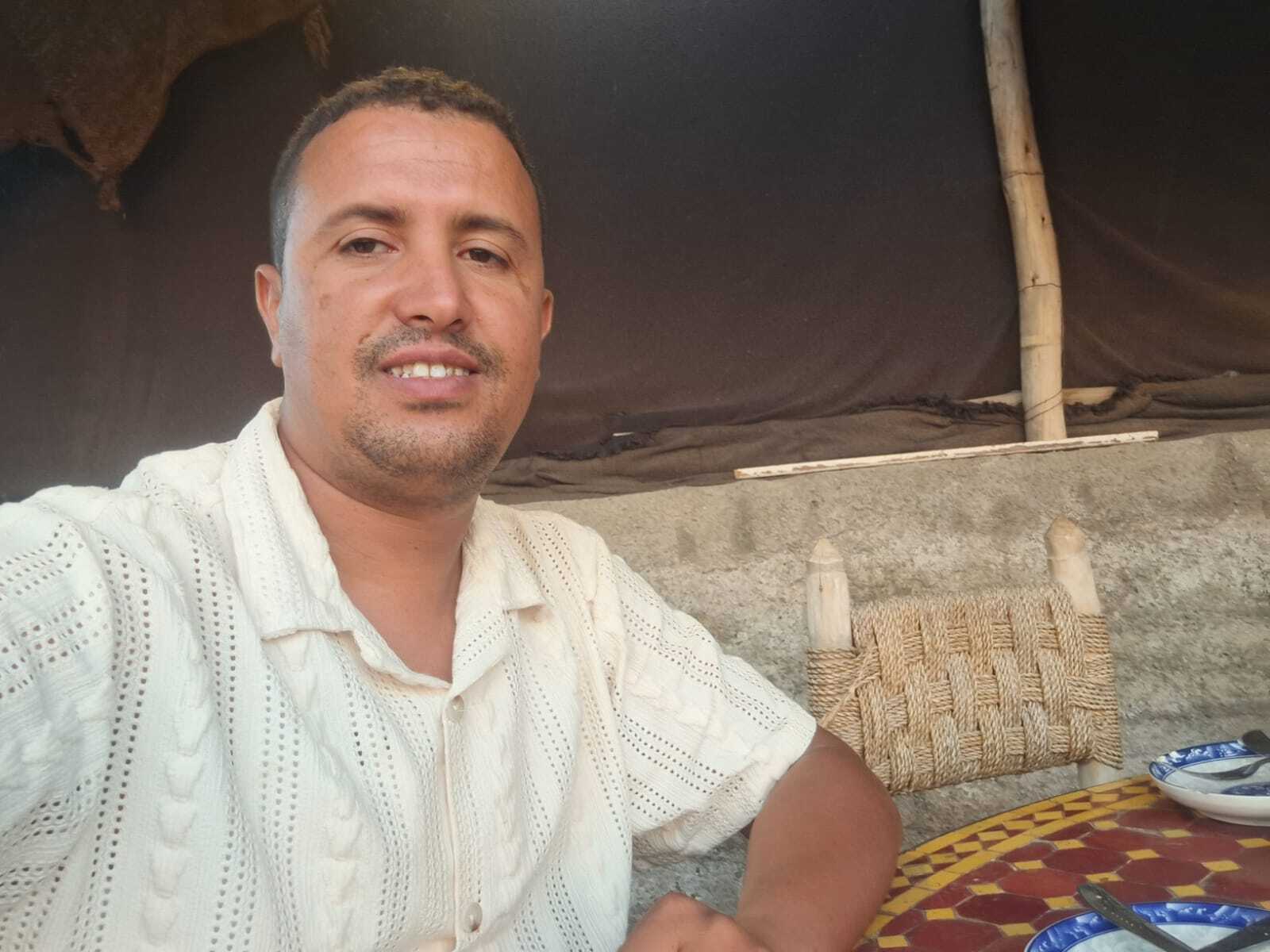
I am Nourddine, founder of Trek Morocco Desert. I was born in this country, my family comes from the south, and I have spent my working life organising treks and journeys through the Moroccan Sahara and the mountains above it. People often ask me which desert hikes are actually good, and the honest answer is that it depends on how many days you have, how remote you want to be, and how you feel about sand. Below are the routes I recommend most often, why each one is different, and what you genuinely need to know before you walk into an erg.
The Best Sahara Hiking Routes in Morocco
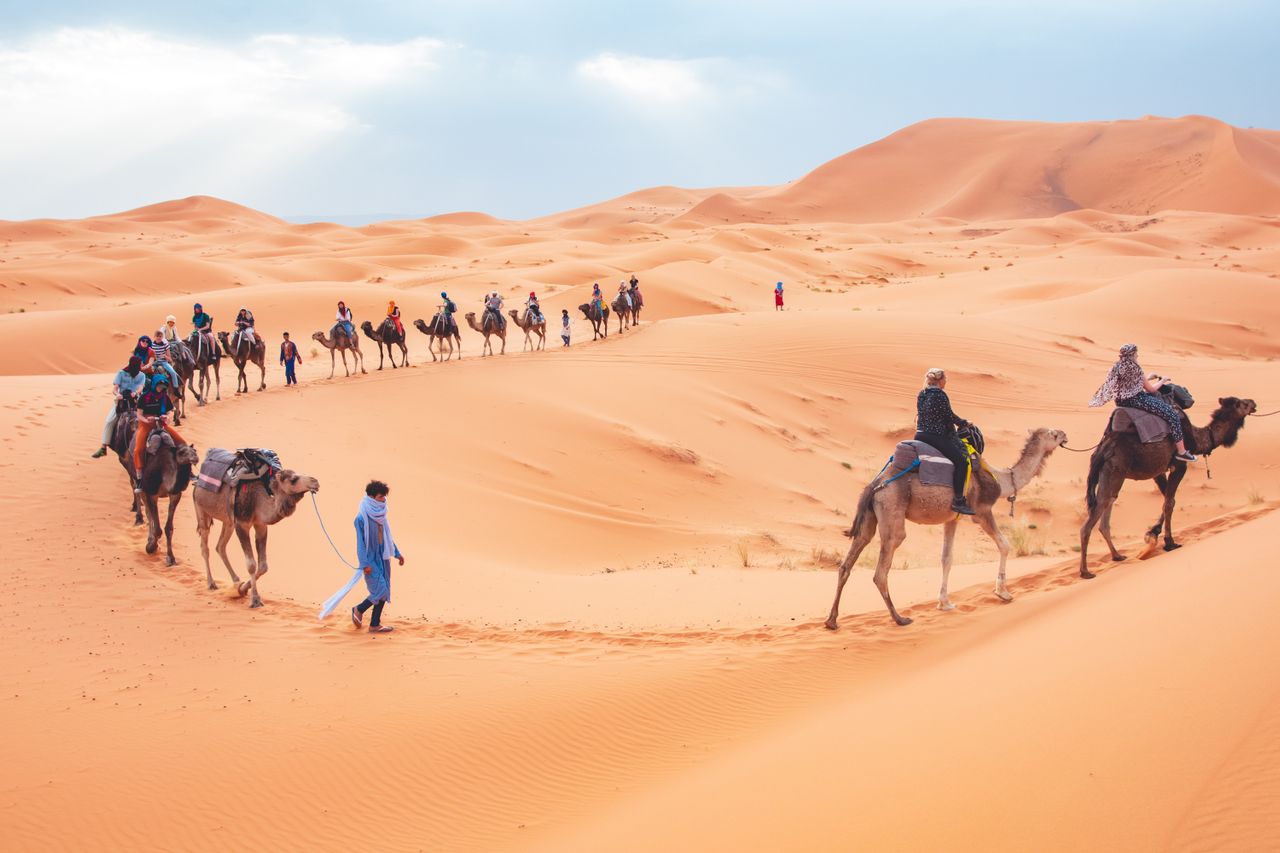
Erg Chebbi, near Merzouga, is where most desert walking begins and there is no shame in that: it is accessible, it is spectacular, and the dunes here rise to around 150 metres, giving you real climbing without any technical difficulty. A two to four day loop takes you out of the dune field into the flat reg beyond, past the seasonal lake of Dayet Srji where flamingos appear after rain, and through the small nomadic settlements and Gnawa villages of Khamlia. Camels carry the water and the camp, you carry a day pack, and you move between bivouacs. Because Erg Chebbi is well served by roads and hotels, it also works for people who want to walk two days rather than commit a week.
Erg Chigaga, reached from M’Hamid, is the serious one. This is the largest erg in Morocco, roughly 40 kilometres long, and it sits about 60 kilometres of piste from the nearest town, which means that once you are walking there you will see almost nobody. A crossing takes three to six days depending on the route, linking the dunes with the dry lake bed of Iriki, the gravel plains and the wells where nomad families still water their herds. The scale is what people remember: you walk for an hour toward a dune and it is barely closer. If your image of the Sahara is emptiness, Chigaga is the honest version of it, and I send every experienced walker here rather than to Merzouga.
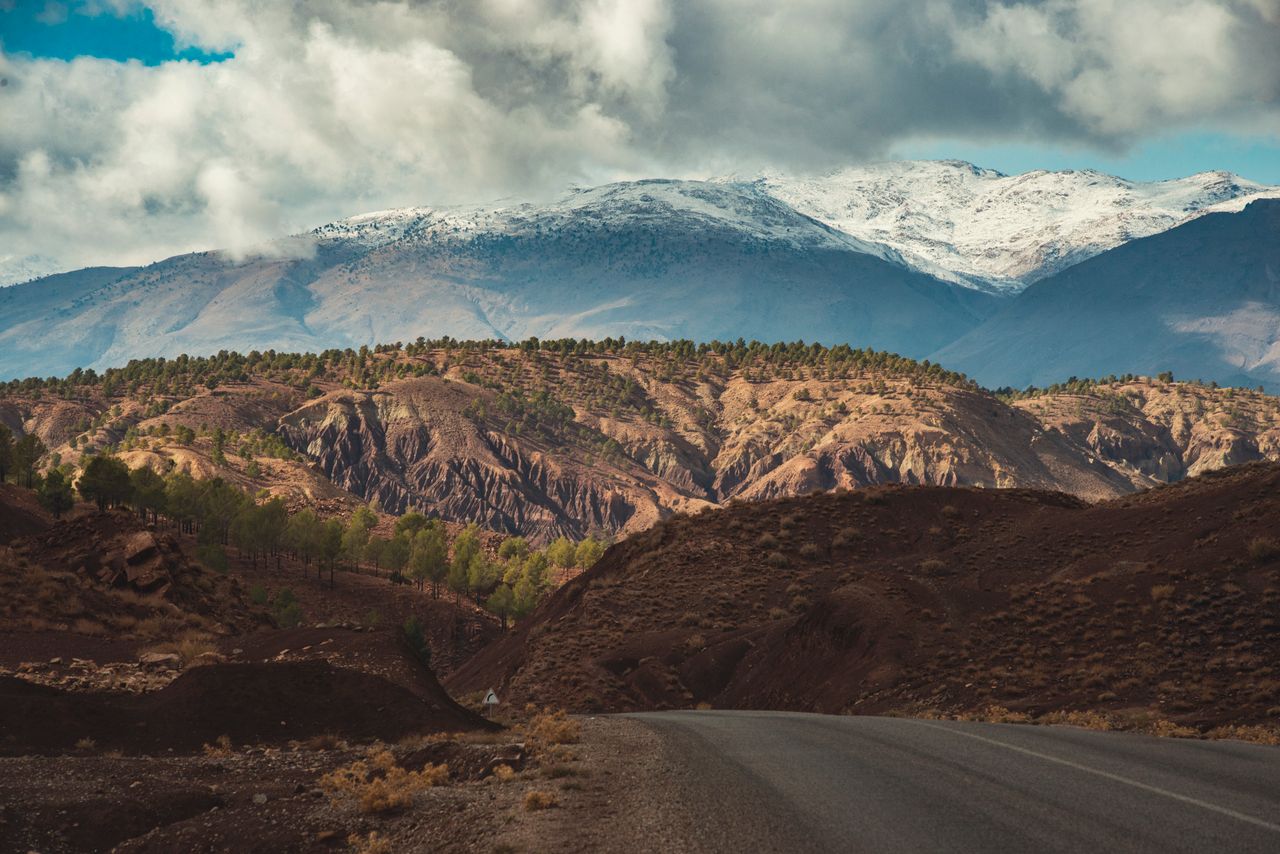
Jbel Saghro is my personal favourite and the one most travellers have never heard of. Strictly speaking it is the pre-Saharan range between the High Atlas and the desert, a landscape of black volcanic towers, table mountains and gorges that looks like nowhere else in Africa, rising to about 2,700 metres at Jbel Amalou n’Mansour. Treks of four to seven days cross it village to village, sleeping in Berber homes or with the Ait Atta nomads who still move their flocks through in winter. And that is the key: while the High Atlas is under snow from December to March, Saghro is dry, clear and walkable, which makes it Morocco’s great winter trekking ground.
Two gentler options deserve a mention. The Draa Valley, the long palm-lined river corridor between Ouarzazate and M’Hamid, offers short daily walks between kasbahs, ksour and palm groves, with a bed at the end of each day: perfect for travellers who want desert landscapes without multiple nights under canvas. And the Tafilalet and Jbel Bani region around Zagora and Foum Zguid mixes oasis walking with rocky ridges and old caravan tracks, a good choice for a three day taste. All of these can be combined: the classic week I build most often is two days in Saghro, a transfer south, then three days walking into Chigaga, finishing with a night in a desert camp under the stars.
When to Go, and What Desert Walking Really Demands
Season is not a preference in the Sahara, it is a safety decision. The walking window is October to April, and within it, November to February gives the most comfortable days at around 18 to 22 degrees, with the clearest light of the year. March and April warm up but bring long daylight and, in a good year, desert flowers after rain. From late May to September, multi-day hiking in an erg is genuinely dangerous rather than merely uncomfortable, with daytime temperatures that can pass 45 degrees, and no reputable operator will run it. The trade-off in the cool months is the night: desert temperatures drop hard after sunset and can approach freezing before dawn in December and January, so a proper sleeping bag and a warm layer are not optional.
The physical reality is manageable for anyone reasonably fit. Days typically cover 12 to 18 kilometres over five to seven hours, with early starts, a long lunch and rest in the shade during the hottest part of the afternoon. Soft sand is more tiring than the distance suggests, roughly like walking uphill on the flat, so the honest advice is to train with a few long walks before you come. Water is the hard constraint: you need four to five litres per person per day, which is 25 kilos of water for a five day trek for one person, and that arithmetic is exactly why desert treks use camels or a support vehicle. That support is not luxury, it is the mechanism that makes the walk possible at all.
On safety, I will be direct: do not walk in an erg without a local guide. Dunes are a moving landscape with almost no fixed reference points, tracks disappear within hours of wind, and people have become seriously lost within a few kilometres of a camp. A GPS does not tell you where the next well is, whether a piste is drivable after rain, or which family will host you if the weather turns. Our guides grew up in these regions, they navigate by landform and knowledge rather than by screen, and every trek we run carries satellite communication, a first aid kit and a support team that knows exactly where the group is each night. That is also what allows us to take mixed-ability groups: a tired walker can ride or travel with the support, and the day continues.
Choosing the Right Desert Trek for You
If you have two or three days and want the desert to be the highlight of a wider Morocco trip, walk at Erg Chebbi. If you have a week and you want real remoteness, cross Erg Chigaga. If you are a keen hiker travelling in winter, go to Jbel Saghro and you will have the mountains of Morocco to yourself. If you want desert scenery with a bed every night, walk the Draa Valley. Families, older walkers and first-timers are all welcome in the desert: what changes is the daily distance, the level of support and the choice of terrain, and that is a planning question, not a barrier.
Ready to walk the Sahara? Tell me how many days you have, your walking experience and when you want to travel, and I will design a private desert trek with routes, camps, guides and a clear all-in price within 48 hours. Message us on WhatsApp, call us, or use the contact form below, and let’s get you out where the only sound is your own footsteps.