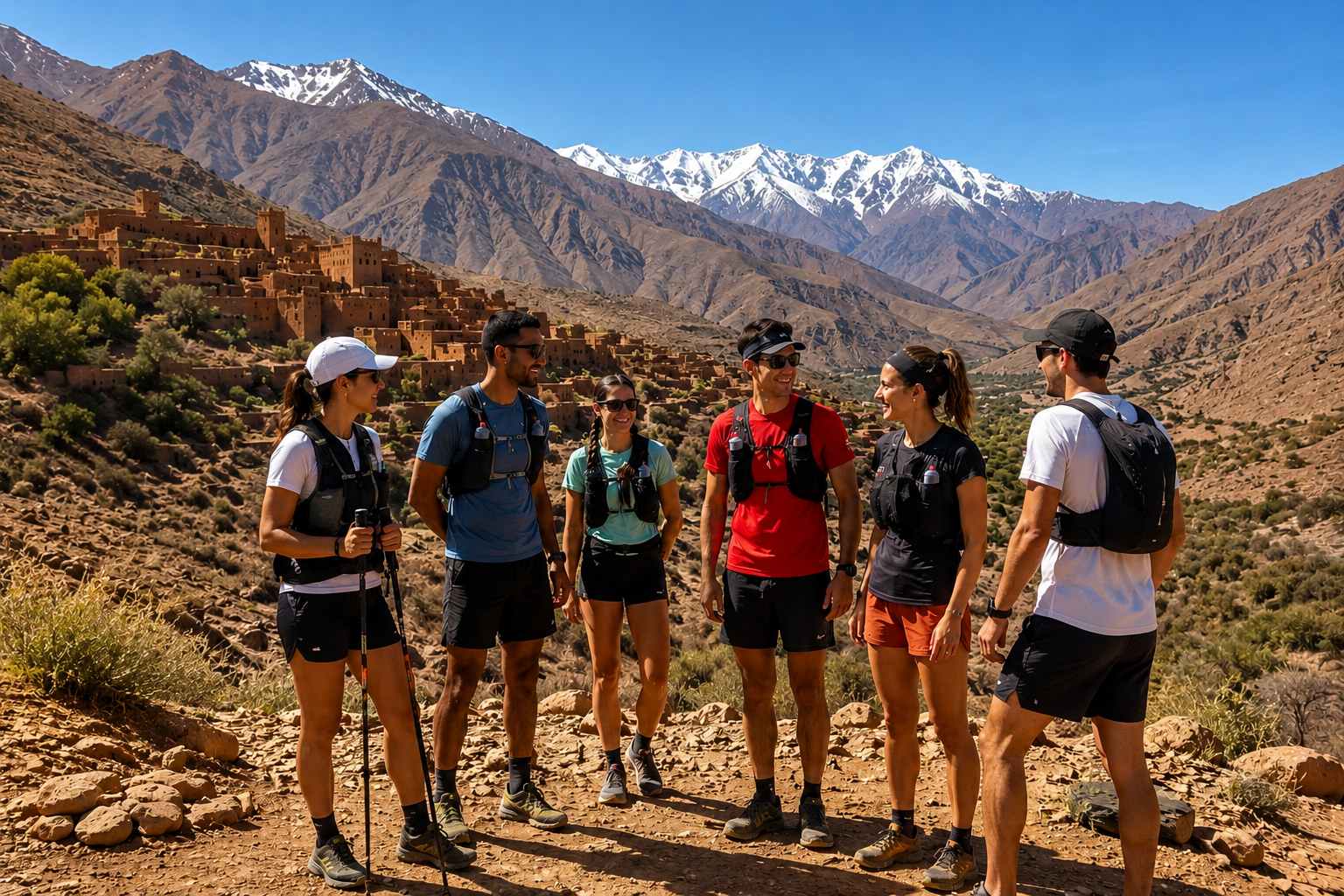

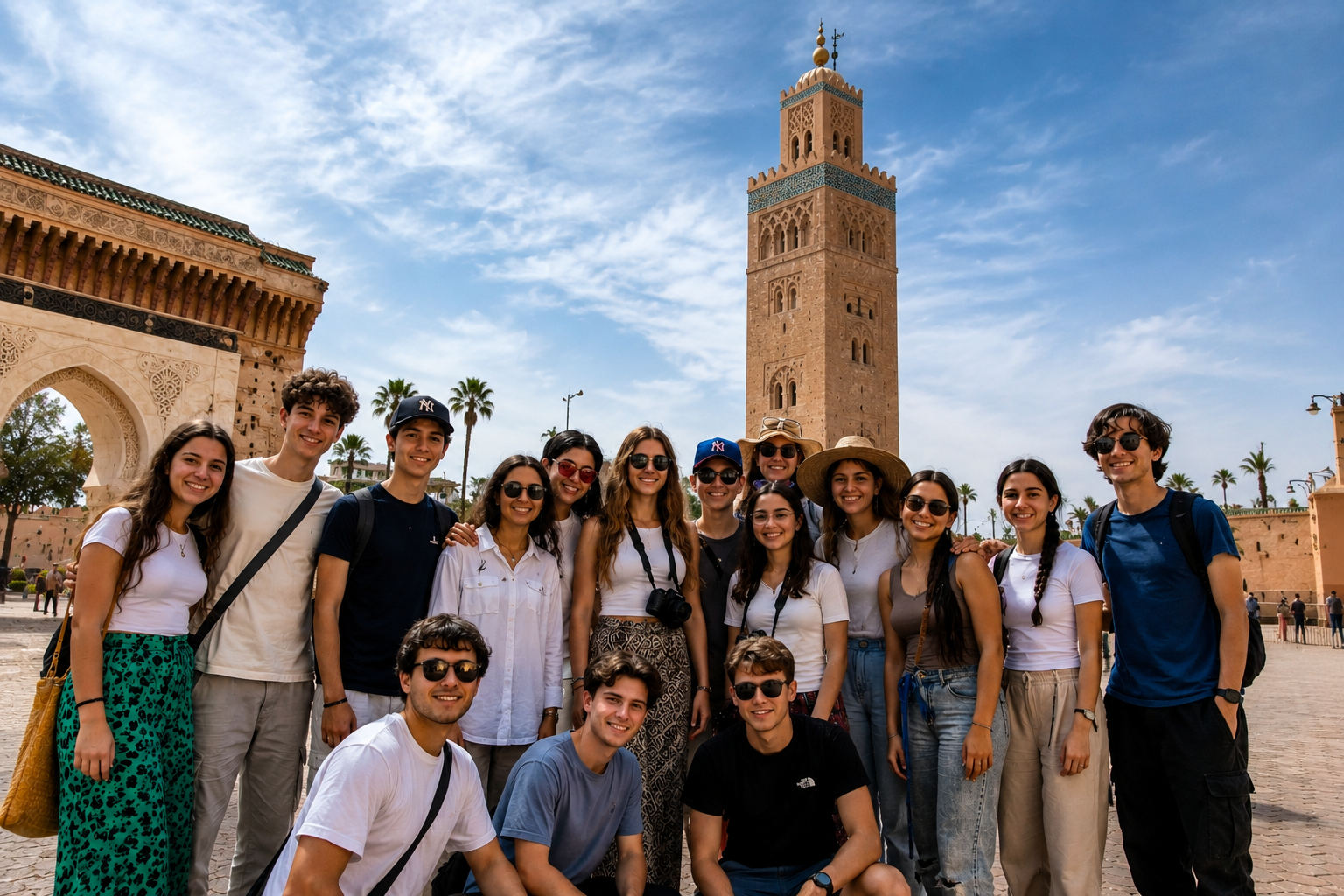
Every year, more schools and universities across the UK, Europe and North America choose Morocco for their student trips, and after two decades of guiding groups here, I understand exactly why. Morocco offers something few destinations can: a genuinely different culture, just three hours from London, where students can practise French or Arabic, walk through a living medieval medina in the morning and stand on a Saharan dune by sunset the next day. It is close enough to be affordable and practical, yet different enough to change the way young people see the world.
My name is Nourddine, founder of Trek Morocco Desert. I was born and raised here, and I have personally guided student groups from secondary schools, sixth forms, universities and youth organisations through every region of the country: the Atlas mountains, the imperial cities of Marrakech and Fes, the Atlantic coast and the Sahara. This guide covers what teachers and trip organisers ask me most often: how safe Morocco really is for student groups, what an educational itinerary looks like in practice, and how we handle the logistics so that staff can focus on their students rather than on transport timetables.
Is Morocco Safe for Student Trips?
This is always the first question, and it deserves an honest answer rather than a marketing one. Morocco is one of the most stable countries in Africa and the Arab world, and it has been welcoming millions of European visitors every year for decades. The Foreign, Commonwealth and Development Office (FCDO) does not advise against travel to any of the areas where student itineraries operate: Marrakech, Fes, Rabat, Essaouira, the Atlas valleys and the Merzouga desert region are all standard, well-travelled routes. Tourism is a pillar of the Moroccan economy, and the country invests heavily in keeping visitors secure, with a visible tourist police presence in every major destination.
That said, safety on a school trip is not only about national statistics. It is about the hundred small decisions made on the ground every day. This is where travelling with a private local operator makes a real difference compared with booking transport and hotels separately. On our student trips, groups travel in modern, air-conditioned vehicles with licensed professional drivers, never in public transport or unregulated taxis. Accommodation is hand-picked: riads and hotels that I know personally, where rooms can be allocated by gender and staff rooms placed on the same corridors. Meals are taken in restaurants we work with year after year, which matters enormously for food hygiene and for managing allergies and dietary requirements, including halal, vegetarian and gluten-free needs.
For risk assessments, we provide everything your school or university requires before departure: full itinerary with timings, named accommodation with contact details, vehicle and driver information, our public liability insurance details, and a 24-hour emergency contact (me, personally, not a call centre). Many of the teachers I work with tell me the Morocco paperwork ends up being easier than trips they have run inside Europe, simply because one local partner is coordinating everything. And because every trip is private to your group, there are no strangers in the vehicle, no shared dormitories and no fixed timetable forcing you through crowded sites at peak hours.
What Students Actually Learn in Morocco
A good student trip is not sightseeing with a school logo on it. Morocco is a living classroom for half a dozen subjects, and we build each itinerary around the curriculum goals your staff bring to us. For geography students, the country is almost absurdly generous: in a single week, groups can study desertification and oasis irrigation systems in the Draa Valley, glacial and river erosion in the High Atlas, coastal processes at Essaouira and rapid urbanisation in Casablanca. Standing inside a khettara, the centuries-old underground irrigation channels near Merzouga, teaches water management in a way no textbook can.
Language students get something even rarer: total immersion with a safety net. French is spoken everywhere in Moroccan cities, so students ordering in cafés, negotiating (gently) in the souks and interviewing artisans are using their classroom French in genuine situations. For Arabic students, Morocco offers daily exposure to both Modern Standard Arabic on signage and media and Darija in the street, and I enjoy teaching groups their first words of Tamazight, the Amazigh language of my own community, which opens conversations about Berber identity, the ⵣ symbol students will see everywhere, and the layered history of North Africa.
History and religious studies groups find fourteen centuries of material culture waiting for them: the Roman ruins of Volubilis, the University of al-Qarawiyyin in Fes (founded in 859 and recognised as the oldest continuously operating university in the world), Almohad minarets, Jewish mellahs and their synagogues, and the great gates of the imperial cities. Because our groups are private, we can arrange encounters that turn a visit into an experience: bread baking in a community oven, a cooking class in a family home, a discussion with students at a Moroccan university, or a night under the stars in a desert camp where the only sound is the wind moving the sand. Ask any teacher which moment their students still talk about a year later, and it is almost always that night in the Sahara.
How We Organise Your School or University Trip
Every student trip we run is built from a blank page, because a GCSE geography group of forty has completely different needs from a university architecture cohort of twelve. The process is simple. You tell us your group size, dates, budget per student and learning objectives, and I design a draft itinerary within a few days, with a transparent per-student price that includes transport, accommodation, meals, entrance fees and guiding. There are no hidden extras and no commission-driven shop stops: I do not take groups to tourist bazaars for kickbacks, a practice that unfortunately remains common in group tourism here.
Most school groups choose five to seven days. A typical week combines two nights in Marrakech, a day crossing the High Atlas via the Tizi n’Tichka pass with stops at Ait Ben Haddou, a night in a desert camp at Merzouga or the Agafay, and a final day back in Marrakech for the medina, the Bahia Palace and the souks. University and sixth-form groups often extend to Fes and Rabat, or build in fieldwork days with data collection. The best months for student travel are February to May and September to November, when daytime temperatures are comfortable for walking and the desert nights are clear. We also run popular February half-term and Easter departures, which fit the UK school calendar well.
Group sizes from 10 to 60 students are all manageable, with additional guides and vehicles added as numbers grow, and we offer free places for accompanying staff at the standard ratios schools require. Payment is staged, with a small deposit to confirm and the balance closer to departure, and we are experienced in working with school finance offices, purchase orders and parental payment schedules.
Ready to start planning? Send me your group size, preferred dates and what you want your students to learn, and I will prepare a tailored itinerary and per-student quote within 48 hours, with all the documentation your risk assessment needs. Message us on WhatsApp, call us, or use the contact form below. Your students will come home with more than photographs: they will come home with a wider world.