

When people imagine escaping a grey European winter, they usually picture a long-haul flight to the Caribbean or Southeast Asia. Yet three hours from London, and even less from Paris or Madrid, Morocco delivers blue skies, 20 degree afternoons and golden light all through December, January and February, at a fraction of the cost and without the jet lag. Winter is, quietly, one of the best times of the whole year to visit this country, and as someone who was born here and has guided travellers through every Moroccan season, I want to give you an honest picture of what winter sun in Morocco really looks like, region by region.
Honest is the important word. Morocco in winter is warm, but it is not the tropics, and the difference between a wonderful winter trip and a disappointing one usually comes down to choosing the right places and packing for the right conditions. Days are gloriously sunny almost everywhere, while nights can be genuinely cold, especially in the desert and the mountains. Get the combination right and you will have sunshine, empty monuments, snow-dusted mountain views and desert camps under sharp winter stars, with far fewer visitors than in spring or autumn.
The Best Winter Sun Destinations in Morocco
Agadir and the southern Atlantic coast are Morocco’s classic winter sun answer. Agadir sits in a sheltered bay with one of the most stable climates in the country: expect 20 to 23 degrees in the afternoon through December and January, six to eight hours of sunshine a day and sea air soft enough for long beach walks, though the ocean itself is bracing at around 17 degrees. This is where Europeans come simply to be warm: promenade, seafood, golf and surf. Just north, the fishing-village-turned-surf-town of Taghazout catches winter swells that attract surfers from all over the world, and lessons run all season for beginners. If your priority is maximum warmth with minimum effort, base yourself here.
Marrakech is the winter city break. Afternoon temperatures reach 18 to 21 degrees, perfect for exploring the medina, the Bahia Palace, the Jardin Majorelle and the souks without the exhausting heat of summer, and café terraces stay busy in the sun all day. The bonus that surprises visitors most is the view: through winter, the High Atlas mountains behind the city are covered in snow, so you drink orange juice in the sunshine of Jemaa el-Fna while looking at white peaks. Evenings drop to 6 to 10 degrees, so you need a proper jacket, and riads light their fireplaces, which is its own kind of magic. Marrakech is also the natural gateway for the two excursions that make a winter trip special: the Agafay desert, thirty minutes away, and the road over the Tizi n’Tichka pass toward the Sahara.
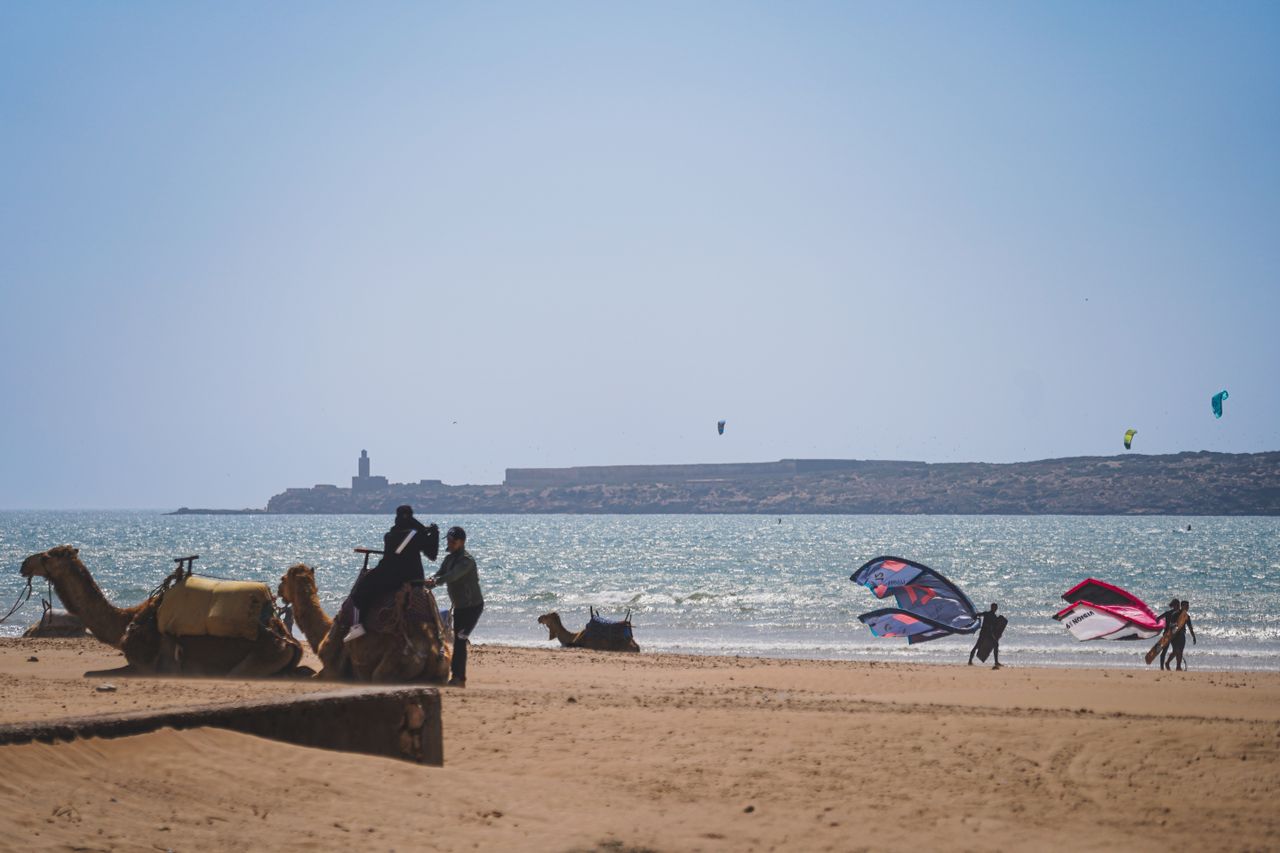
The Sahara at Merzouga is, for me, the secret of the Moroccan winter. Summer visits to the dunes are a battle with heat; in winter, days are a comfortable 18 to 20 degrees, ideal for camel trekking, sandboarding and walking the dunes, and the light in December and January is the clearest of the year. The price you pay is the night: temperatures in the erg can fall close to zero before dawn. A good luxury camp solves this completely with thick duvets, hot water bottles, wood stoves and proper tents, and in exchange you get the desert almost to yourself and a night sky that people remember for the rest of their lives. Essaouira deserves a mention too: milder than Agadir at around 18 degrees and famously windy in summer, it calms down in winter, and its blue and white medina, fresh fish grills and art galleries make it a lovely two-day stop. The one region I steer pure sun-seekers away from in deep winter is the High Atlas itself and cities like Ifrane or Fes at night, where it gets properly cold; beautiful for trekkers and photographers, wrong for a beach mindset.
Planning Your Winter Trip: Weather, Packing and Itineraries
The golden rule of a Moroccan winter is layers. You will live in a t-shirt from late morning to sunset, then want a fleece and a windproof jacket for evenings, and something genuinely warm for a desert night. Rain exists but is modest and short-lived in the south; Agadir and Marrakech each see only a handful of rainy days per month in winter, and the Sahara sees almost none. Daylight runs from roughly 8am to 6pm, which shapes how we plan driving days, and December and January bring the quietest sites of the year: you can stand in the Bahia Palace or at Ait Ben Haddou in scenes that are impossible to photograph without crowds in April.
Winter is also festival season in its own way. Christmas and New Year are not Moroccan holidays, which means the country works normally and hotels celebrate for their guests: many travellers now spend New Year’s Eve in a desert camp, with dinner, drums and a bonfire between the dunes, and wake up to the first sunrise of the year from the top of a dune. These end-of-December departures are our busiest ten days of the whole winter and camps genuinely sell out, so if the Sahara at New Year is your plan, book two to three months ahead. January and February, by contrast, are wide open and are the best value weeks of the entire year, with excellent hotel rates and empty roads. February also brings one of the south’s loveliest sights, the almond blossom in the Tafraoute region and the desert valleys, when whole hillsides turn pink and white.
A week works beautifully. My most requested winter itinerary combines two nights in Marrakech, the crossing of the snow-lined Tizi n’Tichka pass with Ait Ben Haddou and the Draa or Dades valleys, one or two nights in a heated luxury camp at Merzouga, then either back to Marrakech or onward to finish with two slow days by the ocean in Essaouira or Agadir: city, mountains, desert and coast in seven or eight days, all in winter sunshine. Travellers with less time choose Marrakech plus one night in the Agafay desert, which delivers the campfire-and-stars experience within a long weekend. Every trip we run is private, so the balance of beach, desert and culture is set by you, not by a coach timetable.
Ready to trade grey skies for winter sun? Tell me your dates, who is travelling and what matters most to you (warmth, desert, culture or all three) and I will design a private winter itinerary with a clear all-in price within 48 hours. Message us on WhatsApp, call us, or use the contact form below, and spend this winter somewhere the sky is blue.